
lifuyan78@gmail.com
86-18822971180
Bicycle stem forming hydraulic presses are mainly selected based on the stem material, design (especially the connection method with the handlebars), and production scale. The following types of hydraulic presses are used for reference:
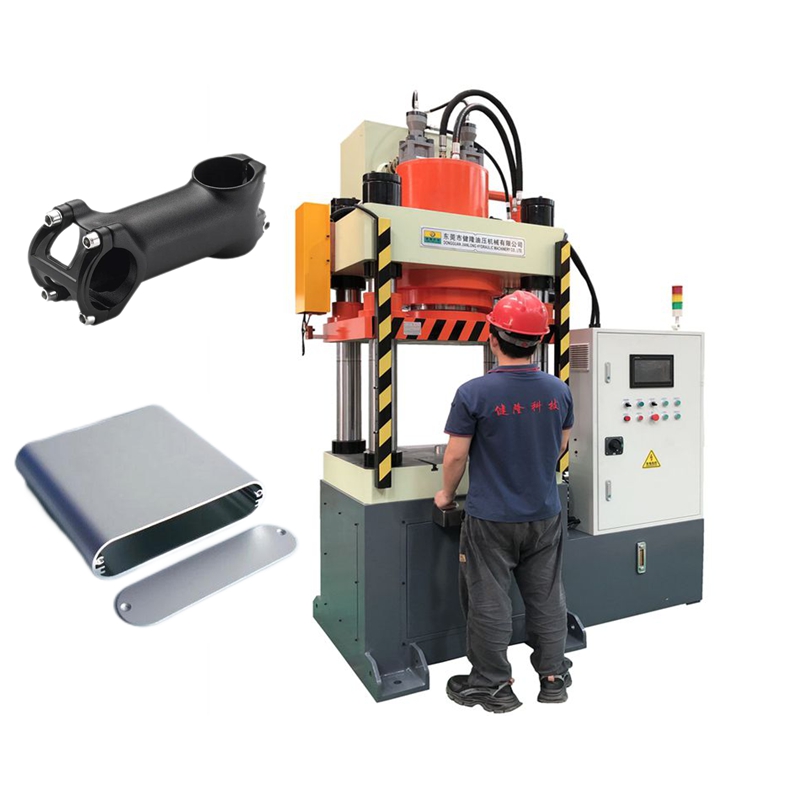
1. Multi-directional Precision Forging Hydraulic Press
1.1 Principle: Similar to the aforementioned multi-directional forging press for wheel hubs, but with a simplified scale and structure. It typically has a vertical master cylinder and horizontal side cylinders.
1.2 Application: Primarily used for manufacturing one-piece, complex stems.
1.2.1 High-end Aluminum Alloy Stems: Forges the approximate shape in one piece, including the body, handlebar clamping area, fork steerer tube connection area, and even internal reinforcing ribs. Only a small amount of CNC precision machining of screw holes and contact surfaces is required afterward.
1.2.2 Advantages: Continuous fiber streamline (metal streamline), strength far exceeding that of split-joint parts; high material utilization; allows for hollow, lightweight structures.
1.3 Equipment Characteristics: Pressure typically ranges from 500-2500 tons, requiring high mold precision and good control synchronization.
2. Cold/Warm Forging Hydraulic Press
2.1 Principle: At room temperature or a lower heating temperature, metal billets are plastically deformed within a die under extremely high pressure.
2.2 Application: Ideal for mass production of steel or aluminum alloy stems. It can forge blanks very close to the final shape, with high dimensional accuracy and good surface quality.
2.3 Equipment Features: Typically a high-speed, high-precision, high-rigidity frame-type hydraulic press or mechanical press. Emphasis is placed on production cycle time and consistency.
3. Die Forging Hydraulic Press (Vertical)
3.1 Principle: This is the most classic forging method. Upper and lower dies are closed, and the material is formed under immense vertical pressure.
3.2 Application: Used for forging the main body blank of stems. For split stems (body and cover plate separate), they can be forged separately.
3.3 Equipment Features: High versatility, wide tonnage range (1000-4000 tons and above). Modern die forging hydraulic presses are also equipped with precision control and quick-change die systems.
4. Carbon Fiber Handlebar Molding Hydraulic Press
4.1 Principle: This is a hot press used for molding composite materials.
4.2 Process: Carbon fiber prepreg is laid into a mold. After the mold is closed, molding is performed under precisely controlled temperature (heat curing) and pressure (compaction, air bubble removal).
4.3 Equipment Features:
4.3.1 Heating System: The mold has built-in electric heating elements or uses a hot press plate. Temperature control must be uniform and precise.
4.3.2 Pressure Control: Requires multi-stage pressure curve control. Initial low pressure allows resin flow, followed by high pressure for compaction.
4.3.3 Parallelism: Extremely high parallelism is required on the worktable to ensure uniform product thickness.
The tonnage is relatively smaller than metal forging (tens to hundreds of tons), but the control requirements are more complex.
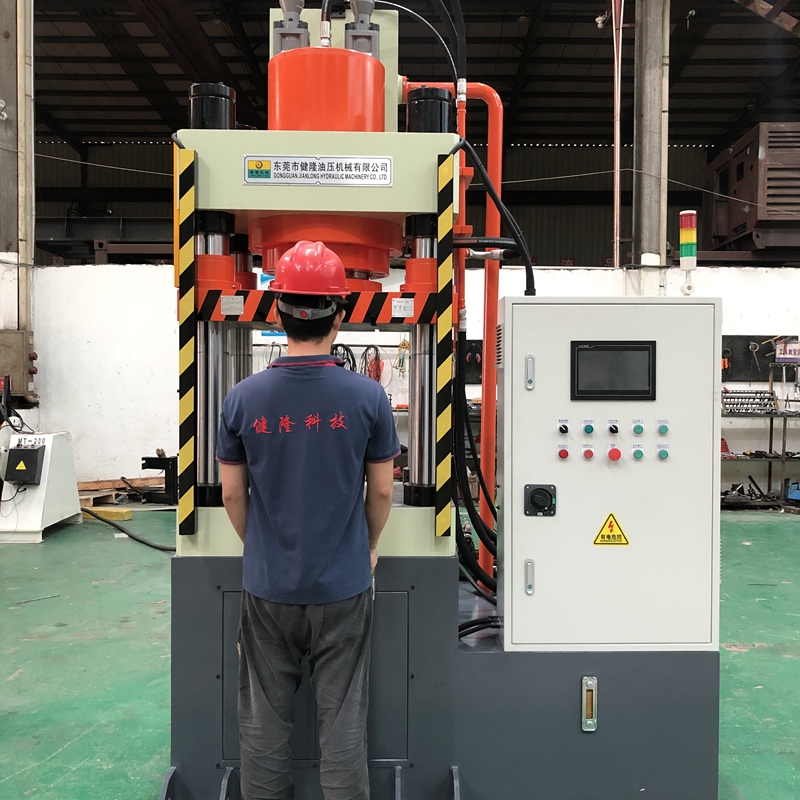
The choice of equipment depends on materials, product design, production volume, and investment budget. Together, they represent the core productivity tools for the modern bicycle industry's upgrade from "manufacturing" to "intelligent manufacturing," and are a key link in the supply chain of high-end bicycle brands. For more information/advice on bicycle handlebar forming hydraulic presses or to purchase other high-quality hydraulic presses, please contact us (or scan the WhatsApp QR code below). Jianlong Hydraulic Technology will provide you with personalized and customized professional solutions and is dedicated to serving you.

Contact: Miss.Li
Phone: 18822971180
Tel: 86-18822971180
Email: lifuyan78@gmail.com
Add: Guangyi Industrial Park, No. 2, Tanglip Jinfu West Road, Liaobu Town, Dongguan City, China
We chat