
lifuyan78@gmail.com
86-18822971180
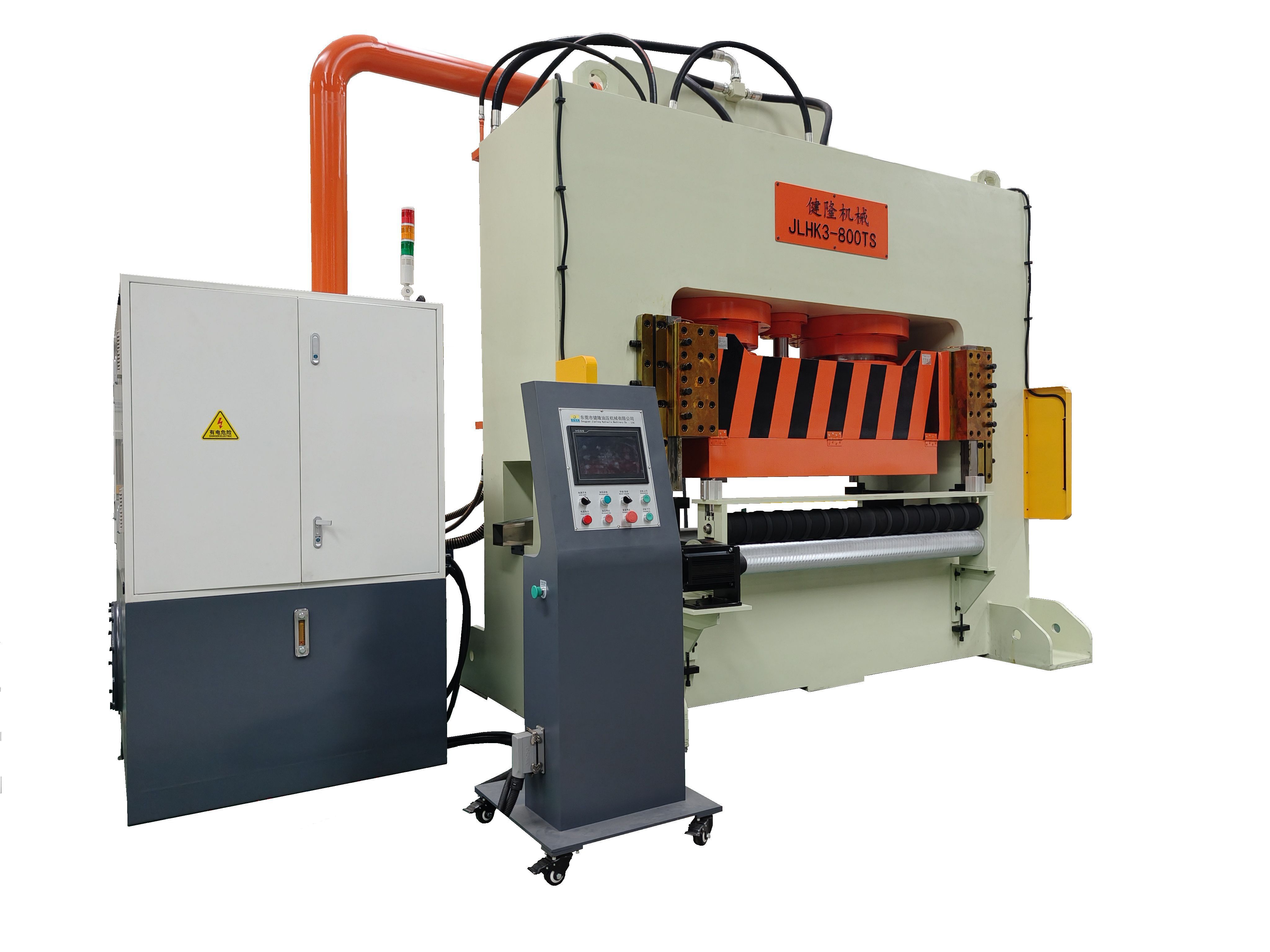
As an important machine model positioned between general-purpose and large-tonnage specialized types, the 800-ton leather punching hydraulic press is widely used in leather processing, especially in fields with high requirements for precision and efficiency (such as mid-to-high-end automotive interiors, furniture, and precision bags). Its technical features closely revolve around four core requirements: precision, high efficiency, stability, and ease of use.
1. Core Design and Structural Features
1.1 Machine Body Structure: High Rigidity and Precision Guarantee
◦ Mainstream Choice: Frame Structure. Compared to the four-column type, the frame-type machine body (integral welding or pre-tensioned tie rod type) has significant advantages in the 800-ton class:
■ High Rigidity: Minimal deformation, particularly suitable for wide-area punching requiring uniform force distribution across the entire table surface.
■ High Precision: Excellent long-term parallelism between the slider and the worktable ensures consistent punching depth and burr-free edges.
■ Easy Automation Integration: The frame structure provides a stable installation benchmark, facilitating the installation of robotic arms, vision systems, and conveyor belts.
◦ Four-post hydraulic systems are still used, mostly in general applications where cost is more critical and the platform is relatively small. However, their accuracy retention and resistance to off-center loads are generally weaker than those of frame machines of the same tonnage.
1.2 Hydraulic System: Balancing Speed, Pressure, and Energy Efficiency
◦ Drive Schemes:
■ Servo Hydraulic System (Optimal, and a High-End Market Trend): Uses a servo motor to drive a fixed-displacement pump or a variable-displacement pump. The motor speed and pump output flow can be adjusted in real time according to actual needs, achieving on-demand oil supply. Its characteristics are:
■ Significant Energy Saving: Extremely low energy consumption during standby and idle periods, saving 30%-50% more energy than traditional asynchronous motor + fixed-displacement pump systems.
■ Precise Control: Closed-loop control of pressure and speed, high repeatability.
■ Low Noise, Stable Oil Temperature.
■ Proportional Hydraulic System (Performance and Cost Balance): Uses an asynchronous motor to drive a constant-power variable-displacement pump, controlling flow and pressure through a proportional valve. Performance is superior to ordinary valve-controlled systems, making it the mainstream and reliable choice.
◦ Oil Circuit Design: Multi-stage pressure and speed control. Achieve an intelligent cycle of "fast descent → slow descent with pressure (material probe) → feed and punching → pressure holding/instant stop → fast return," protecting both the mold and the material.
2. Targeting the Core Performance Characteristics of Leather Punching
2.1 Precision Punching Control
◦ Multi-segment Pressure Setting: Contact pressure, punching pressure, and pressure holding pressure can be set independently. This avoids excessive compression or indentation of the leather.
◦ Stroke Control Accuracy: Employs high-precision displacement sensors (such as magnetic rulers) to control the repeatability of the slider's bottom dead center position (up to ±0.05mm), ensuring completely consistent punching depth each time.
◦ Parallelism Guarantee: Utilizes a four-corner leveling system (through multiple cylinders or independent control valves) to monitor and adjust the displacement of the slider's four corners in real time, ensuring ultra-high parallelism even under off-center loading conditions (the mold does not cover the entire table).
2.2 High-Efficiency Production Characteristics
◦ High Punching Frequency: By optimizing the hydraulic circuit (such as adding filling valves and rapid cylinders), the idle stroke speed is significantly increased, shortening the cycle time.
◦ Large opening height and tabletop: Typical worktable dimensions can reach 1400mm x 1000mm or larger, with an opening height ≥800mm, facilitating the placement of multi-layer leather and large molds, enabling "one cut, multiple processing" and increasing output per batch.
◦ Quick mold change system: Optional hydraulic clamping quick mold change device reduces downtime when changing products.
2.3 Intelligent and Automation Interfaces
◦ Advanced Human-Machine Interface (HMI): Large touchscreen, storing hundreds of mold parameters (pressure, speed, stroke, holding time), accessible with a single key.
◦ Programming and Diagnostics: Equipped with self-diagnostic functions, graphical display of alarm points, and easy maintenance.
◦ Standardized Interfaces: Reserved communication and control interfaces with automatic feeders (belt/robot), vision positioning systems, and waste collection systems (high-pressure air blowing/negative pressure adsorption), facilitating integration into fully automated production lines.
3. Key Components and Configuration Highlights
3.1 Electrical Control System: Utilizes internationally renowned brand PLCs (such as Siemens, Mitsubishi, and Omron) and low-voltage electrical components to ensure long-term operational stability and reliability.
3.2 Safety Protection:
◦ Dual-circuit safety regulations: Complies with CE/OSHA and other safety standards.
◦ Two-hand operation buttons, emergency stop, light curtain/safety barrier.
◦ Hydraulic and mechanical locking: Prevents accidental slide drop during maintenance.
3.3 Molds and Worktable:
◦ Worktable: Equipped with T-slots and standard template holes, featuring an air cushion ejection device (optional) for easy demolding and part removal.
◦ Automatic lower pad forward/backward system (high-end option): Used for replacing and protecting the punching pad, further enhancing automation.
4. Differences from a 1000-ton machine and Application Positioning
4.1 Tonnage and Cost: The purchase cost, operating energy consumption, and footprint of an 800-ton machine are typically lower than those of a 1000-ton machine, offering better cost-effectiveness.
4.2 Processing Range: The 800-ton press is suitable for most leather punching processes. 1000-ton or larger models are only considered when a single punching area is extremely large (e.g., an entire car seat cover), the number of material layers is extremely high (e.g., ultra-thick composite materials), or the mold is exceptionally complex.
4.3 Application Positioning: The 800-ton leather punching hydraulic press is an ideal mainstay for precision mass production. It can meet the high-quality requirements of automotive interiors (e.g., door panels, armrests, non-full-size seats), high-end furniture, and branded bags, while offering more flexibility and a more controllable return on investment period compared to ultra-large equipment.
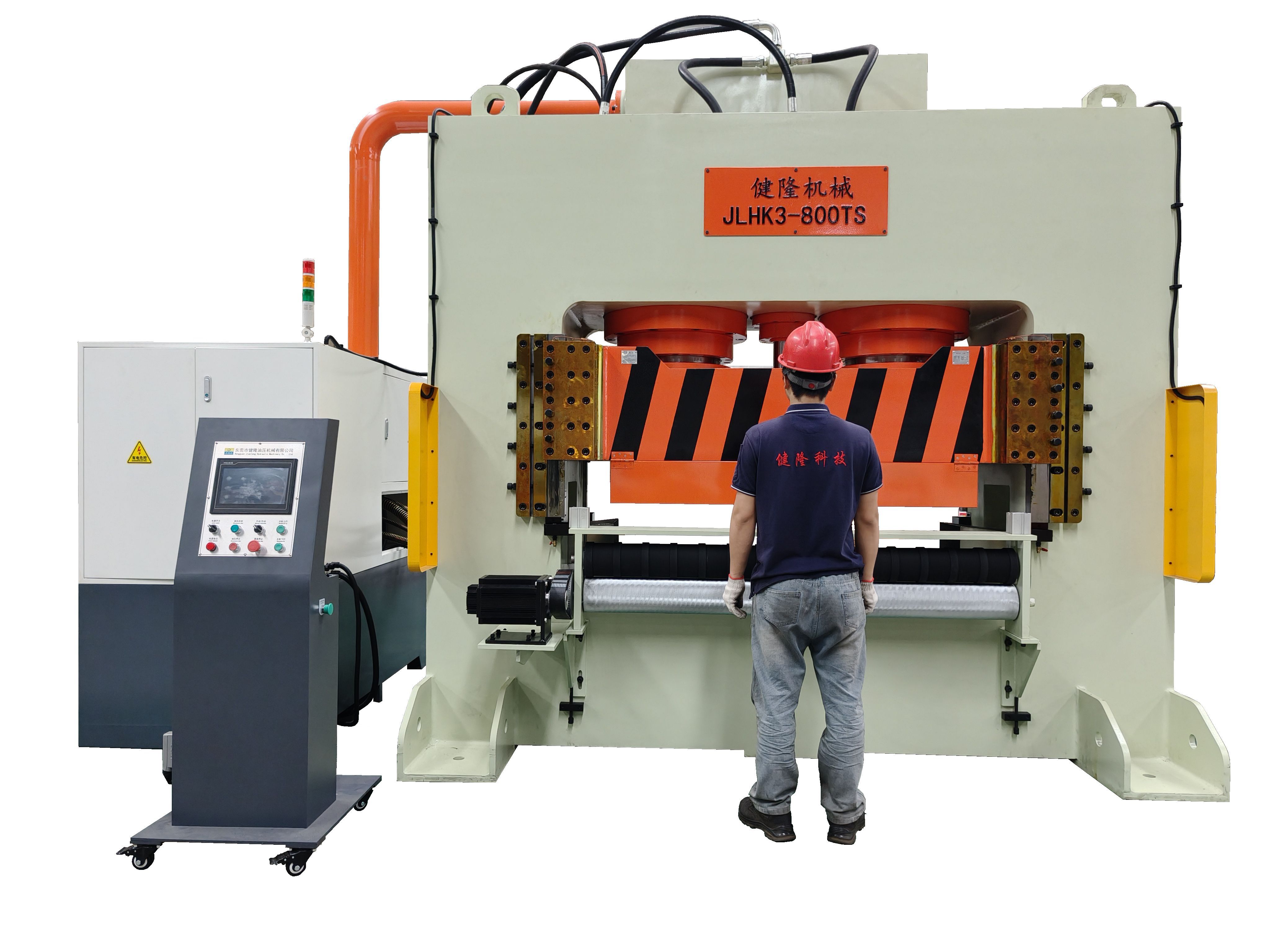
The core value of the 800-ton leather punching hydraulic press lies in its "stability": consistently producing products of uniform quality through millions of punching cycles, minimizing scrap rates and downtime. When selecting a model, focus should be placed on actual process requirements (maximum processing size, number of layers, accuracy), and prioritizing the specific technical solutions and measured data regarding "accuracy retention," "energy consumption performance," and "automation friendliness." For more information/advice on leather punching hydraulic presses or to purchase other high-quality hydraulic presses, please contact us (or scan the WhatsApp QR code below). Jianlong Hydraulic Technology will provide you with personalized and customized professional solutions and is dedicated to serving you.

Contact: Miss.Li
Phone: 18822971180
Tel: 86-18822971180
Email: lifuyan78@gmail.com
Add: Guangyi Industrial Park, No. 2, Tanglip Jinfu West Road, Liaobu Town, Dongguan City, China
We chat