
lifuyan78@gmail.com
86-18822971180
A servo motor is a high-performance motor capable of precisely controlling its position, speed, and acceleration. It is not an isolated device, but rather the core actuator of a closed-loop control system.
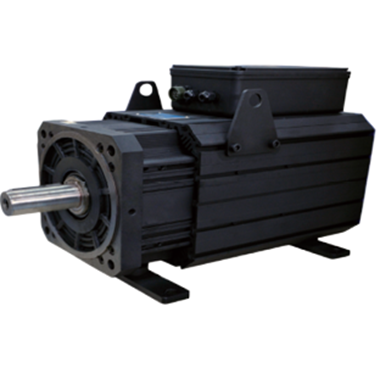
1. Core Concept: Closed-Loop Feedback Control
This system continuously compares the difference (error) between the "target command" and the "actual state," and automatically adjusts the motor's output until the error approaches zero. This gives it high precision, fast response, and strong overload capacity that ordinary motors (such as stepper motors and induction motors) lack.
2. The Closed-Loop Feedback Control System Workflow is as follows
2.1 The controller issues the target command (e.g., rotate to a 30-degree angle, run at a speed of 1000 rpm).
2.2 The servo driver receives the command and drives the servo motor to rotate.
2.3 An encoder (or other sensor) installed at the motor's tail detects the motor's actual position and speed in real time and feeds the signal back to the driver.
2.4 The control loops (position loop, speed loop, current loop) inside the driver compare the "target value" with the "feedback value" and calculate the error.
2.5 The driver immediately adjusts the current (torque) and voltage (speed) supplied to the motor based on the magnitude of the error, forcing the motor to quickly and accurately reach and maintain the target state.
2.6 This process continues within milliseconds or even microseconds, forming a dynamic balance to ensure the load accurately follows the command.
3. Main Types
Based on the working principle of the motor itself, they are mainly divided into two categories:
3.1 AC Servo Motors
◦ Permanent Magnet Synchronous Servo Motor: Currently the most mainstream and widely used type.
• Rotor: Uses high-performance rare-earth permanent magnets (such as neodymium iron boron).
• Advantages: High power density, high efficiency, extremely fast dynamic response, smooth low-speed operation, small size, and high torque. It is the absolute mainstay of industrial robots and high-end machine tools.
◦ Asynchronous AC Servo Motor:
• Rotor is a squirrel-cage structure, without permanent magnets.
• Advantages: Robust structure, lower cost, no need to worry about demagnetization, suitable for high-speed, high-power applications (such as spindle drives and large centrifuges). • Disadvantages: Complex control; efficiency and power density are typically lower than permanent magnet synchronous motors.
3.2 DC Servo Motor (Traditional Type)
◦ The rotor is powered via carbon brushes and a commutator. Due to mechanical wear, sparking, and high maintenance requirements, it has been replaced by AC servo motors in most industrial fields. However, it is still used in some low-cost, low-power specific applications.
4. Key Performance Characteristics
4.1 High Precision: Positioning accuracy can reach micrometer or even nanometer levels, with no cumulative error.
4.2 Fast Response: Extremely short delay from command issuance to action response, with high acceleration.
4.3 Wide Speed Range: Can operate smoothly from extremely low speeds (e.g., below 1 rpm) to high speeds (thousands of rpm), with stable torque at low speeds (no "creeping" phenomenon).
4.4 Strong Overload Capacity: Typically possesses 2-3 times the instantaneous overload capacity, capable of withstanding short-term heavy load impacts.
4.5 Good Stability: Closed-loop control enables it to resist load disturbances and quickly recover to a stable state when the load suddenly changes.
5. Core Component Details
5.1 Motor Body: The power-generating component, crucial for high-performance permanent magnet materials and optimized electromagnetic design.
5.2 Encoder (Feedback Device): The "eyes" of the servo system, vitally essential.
◦ Infinite Encoder: Outputs pulse signals, determining relative position by counting pulses. Lower cost, but position is lost after power failure (requires zeroing).
◦ Absolute Encoder: Each position corresponds to a unique digital code; position information is not lost after power failure. Single-turn and multi-turn absolute encoders are standard configurations for high-end applications.
◦ Resolution is a key encoder indicator (e.g., 17-bit, 23-bit), determining the theoretical control accuracy of the system.
5.3 Servo Driver: The "brain" and "nerve center" of the servo system.
◦ Receives controller commands and encoder feedback.
◦ Executes a complex three-loop control algorithm (from inside to outside: current loop -> speed loop -> position loop).
◦ Converts control signals into powerful PWM (Pulse Width Modulation) power output to drive the motor.
◦ Modern drives integrate a wealth of functions: parameter settings, fault diagnosis, communication interfaces, vibration suppression, etc.
6. Typical Application Areas
6.1 Industrial Automation: Industrial robots (each joint is a servo axis), CNC machine tools (feed axes, spindles), electronic assemblyequipment (patch mounters, winding machines), packaging machinery.
6.2 Precision Instruments: Semiconductor equipment (lithography machines, wafer handling), medical devices (CT scanners, surgical robots), astronomical telescopes.
6.3 Mobile Vehicles: AGV/AMR drive wheels, UAV ESCs, electric steering systems for electric vehicles.
6.4 Special Equipment: Radar antenna drives, stage lighting control, high-precision valve control.
7. Key Considerations for Selection
7.1 Load Characteristics: Required torque (continuous, peak), inertia (matching load inertia with motor inertia), speed range.
7.2 Accuracy Requirements: Resolution, positioning accuracy, repeatability.
7.3 Dynamic Response: Required acceleration, system rigidity.
7.4 Environmental Conditions: Protection rating (IP), temperature, vibration.
7.5 Power Supply and Communication: Power supply voltage, bus protocol (EtherCAT, PROFINET, CANopen, etc.).
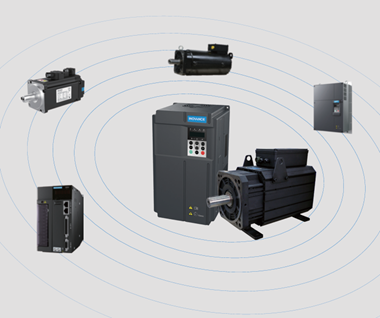
Servo motors are the cornerstone of modern high-end motion control. Through the core mechanism of closed-loop feedback, they convert electricity into precise, fast, and intelligent mechanical motion, making them indispensable key actuators for achieving automation, intelligence, and precision manufacturing. From tiny chip manufacturing to massive industrial production lines, servo motors are ubiquitous, serving as the "precision muscles" driving modern industry forward. For more information/advice on servo motors or to purchase other high-quality hydraulic presses, please contact us (or scan the WhatsApp QR code below). Jianlong Hydraulic Technology will provide you with personalized and customized professional solutions, dedicated to serving you.

Contact: Miss.Li
Phone: 18822971180
Tel: 86-18822971180
Email: lifuyan78@gmail.com
Add: Guangyi Industrial Park, No. 2, Tanglip Jinfu West Road, Liaobu Town, Dongguan City, China
We chat