
lifuyan78@gmail.com
86-18822971180
The core basis for the "classification" of safety sensors is international/Chinese national standards, primarily referencing ISO 13849-1 (Performance Class PL) and IEC 61508 / IEC 62061 (Safety Integrity Class SIL). These define how reliably a sensor can perform its safety functions (such as stopping dangerous movements) when a hazard occurs. Below is a summary from Jianlong Hydraulic Technology for your reference!
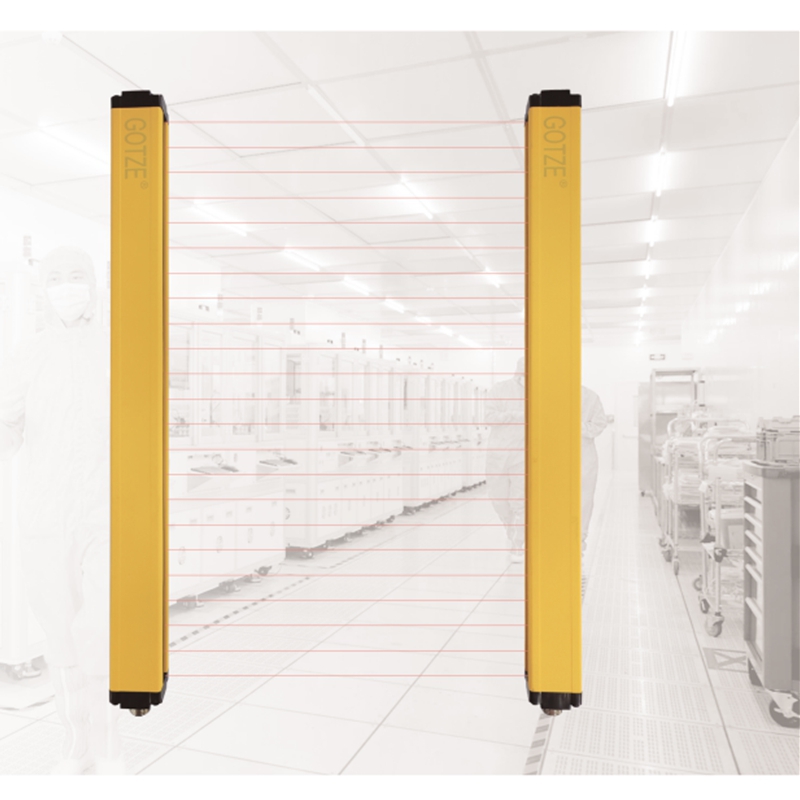
1. Performance Class (PL): From a to e
1.1 Standard: ISO 13849-1
1.2 Definition: Measures the level of a safety control system (including sensors)'s ability to effectively perform protective functions when a hazard occurs. It is a discrete class from a to e.
1.3 Classification (from low to high)
■ PL a / b: Lowest level. Suitable for extremely low risk situations where failure will not cause serious injury. For example, warning light sensors.
■ PL c: Medium level. Suitable for medium risk situations requiring structured safety measures. For example, monitoring of two-handed control buttons.
■ PL d: High level. Applicable to high-risk equipment (such as stamping machines, bending machines). Requires high reliability and self-diagnosis of faults. For example, safety light curtains, safety mats with monitoring.
■ PL e: Highest level. Applicable to extremely high-risk environments. Requires extremely high reliability, redundant design, and resistance to common-cause failures. For example, safety laser scanners in robot work areas.
2. Safety Integrity Level (SIL):From 1 to 4
Similar to PL, but with a greater emphasis on the probabilistic calculation of electrical/electronic/programmable electronic systems. SIL 2/3 usually corresponds to PL d/e and is the mainstream safety requirement for industrial machinery.
2.1 Standards: IEC 62061 (Machinery) / IEC 61508 (General)
2.2 Definition: Focuses on the probabilistic measurement of electrical/electronic/programmable electronic safety systems, representing the probability that the system can successfully perform the required safety functions under specified conditions. It is a level from 1 to 4.
2.3 Classification (from low to high):
■ SIL 1: Risk reduction factor of 10-100 times.
■ SIL 2: Risk reduction factor of 100-1000 times. Widely used in industrial automation safety systems.
■ SIL 3: Risk reduction factor of 1000-10000 times. Used in high-risk process industries and machinery.
■ SIL 4: Highest, used in extreme risk areas such as nuclear power and railways (rarely used in the machinery field).

Safety sensors are mainly classified into PL a-e (performance level) and SIL 1-4 (safety integrity level) according to their reliability. For industrial equipment protecting personal safety, certified safety sensors of PL d/SIL 2 and above are usually required. For more information/advice on safety sensors or to purchase other high-quality hydraulic presses, please contact us (or scan the WhatsApp QR code below). Jianlong Hydraulic Technology will provide you with personalized and customized professional solutions and is dedicated to serving you.
Contact: Miss.Li
Phone: 18822971180
Tel: 86-18822971180
Email: lifuyan78@gmail.com
Add: Guangyi Industrial Park, No. 2, Tanglip Jinfu West Road, Liaobu Town, Dongguan City, China
We chat