
lifuyan78@gmail.com
86-18822971180
This issue focuses on the core technologies and components of a fully automatic puzzle packaging machine. This equipment represents the most unique and challenging part of the entire production line. Its core objective is to transform regularly arranged puzzle pieces into completely randomized, disordered bags of fragments, while ensuring 100% accurate counting.Below is a sharing from Jianlong Hydraulic Technology for your reference!
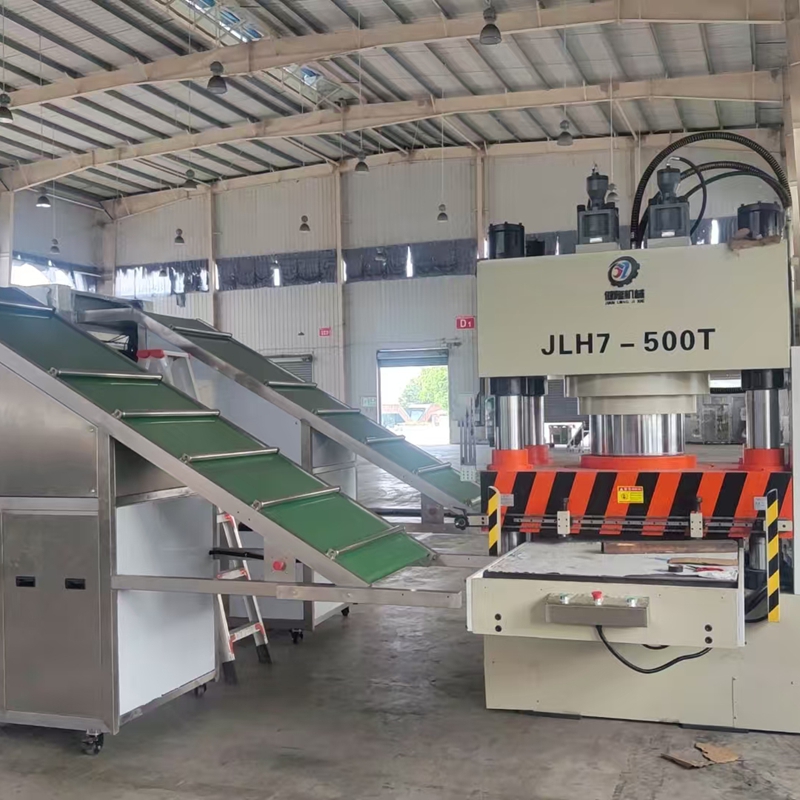
1. Core Process Review
1.1 Input: Stacks of pre-cut puzzle pieces → Dispersing and Randomization → Counting → Bagging and Sealing
1.2 Output: Individually packaged finished products.
2. Six Core Technologies and Components
2.1 Flexible Separation and Initial Dispersion Technology
• Objective: To gently separate tightly stacked puzzle pieces into single layers or small pieces, preparing for deeper dispersion.
• Key Technologies/Components:
◦ Bionic Vibratory Feeder/Page Separation Mechanism: Employs low-speed, high-amplitude vibration or flexible scrapers/rollers to separate puzzle pieces one by one or in small batches, avoiding jamming and damage.
◦ Key Points: Must adapt to puzzle pieces of varying thicknesses and sizes; the movement must be "gentle" to prevent edge curling of fragments in the initial separation stage.
2.2 Three-Dimensional Randomized Disassembly Technology (The Core Patent Point)
• Goal: To achieve complete randomization of the spatial posture of the fragments, ensuring an extremely low probability of any two pieces connecting.
• Key Technologies/Components:
◦ Multi-Level Chaotic Channel Design: This is the "heart" of the device. The channel typically consists of multiple modules with different angles, baffles, and drop heights.
■ Three-Dimensional Maze Structure: Under the influence of gravity, the fragments undergo multiple collisions, tumbling, and changes of direction, achieving random movement.
■ Adjustable Design: The baffle angles and spacing of the channel are adjustable to accommodate fragments of different sizes and shapes, ranging from 500 to 2000 pieces.
◦ Controllable Vibration Assist System: High-precision pneumatic or electromagnetic vibrators are installed at key nodes in the channel to prevent debris from accumulating and getting stuck at corners with gentle pulse vibrations, further promoting randomization.
◦ Low-Speed Airflow Assist (Optional): Introducing low-speed, diffused airflow at specific locations helps lightweight debris "float" and then fall, increasing randomness, especially suitable for ultra-thin puzzles.
2.3 High-Precision Non-Destructive Counting Technology (The Most Critical Quality Control Point)
• Goal: To achieve 100% accurate counting without damaging the debris during dynamic, random falling.
• Key Technologies/Components:
◦ Photoelectric Sensor Array (Mainstream Solution):
■ Multiple sets (usually 2-3 sets) of through-beam photoelectric sensors are set in narrow drop channels to form a "light curtain."
■ When debris passes through, it blocks the light beam, generating a pulse signal. Through advanced deduplication algorithms (such as based on pulse width and the order of adjacent sensor signals), overlapping and adjacent falling debris can be effectively distinguished, with an accuracy rate of over 99.95%.
◦ Machine Vision Counting System (High-End Solution):
■ Install a high-speed industrial camera at the end of the dispersing channel or above the material dropper.
■ Utilize image processing algorithms to identify and count the falling fragments in real time. The advantage is that it can not only count but also preliminarily detect the integrity of the fragments (e.g., whether they are incomplete), but the cost is higher and the requirements for algorithms and computing power are higher.
◦ Redundant Verification Design: Typically employs a dual system of "main counting + verification counting," or supplemented by a high-precision dynamic checkweigher in the final stage to perform microgram-level checks on the total weight of each bag, providing double assurance of absolute quantity accuracy.
2.4 High-Speed Adaptive Packaging Technology
• Objective: To quickly and accurately pack the counted fragments into packaging bags.
• Key Technologies/Components:
◦ Servo-Driven Bag Opening Mechanism:
■ Bag Retrieval: Vacuum suction cups or mechanical grippers precisely retrieve bags from the bag magazine.
■ Bag Opening: Using a combination of reverse suction and blowing or flexible mechanical fingers, self-sealing bags or pre-made bags can be opened with 100% reliability.
■ Bag Opening Positioning and Holding: Ensures the bag opening remains open and in the correct position throughout the filling process.
◦ Guided Discharge Funnel: A specially shaped funnel guides fragments smoothly into the bag, preventing splashing and electrostatic adsorption. The inside of the funnel is often coated with an anti-static, low-friction coating such as Teflon.
2.5 Intelligent Detection and Control System (Equipment Brain)
• Objective: Coordinate all actions, handle anomalies, and ensure stable operation.
• Key Technologies/Components:
◦ Programmable Logic Controller (PLC): Executes core logic control, processes sensor signals, and drives motors and pneumatic components.
◦ Human-Machine Interface (HMI): Provides parameter settings (target quantity, speed), status monitoring, production statistics, and fault alarms.
◦ Machine Vision Quality Inspection Station (Optional but Trend-Based): Detection points are set after dispersing or before bagging to identify and remove poorly printed, soiled, or severely deformed fragments.
◦ Internet of Things (IoT) Module: Connects to the network to enable remote status monitoring, production data upload to the MES system, and predictive maintenance reminders.
2.6 Modular and Quick Changeover Technology
• Objective: To enable a single machine to flexibly adapt to the production of puzzles with different numbers and sizes of pieces.
• Key Technologies/Components:
◦ Quick Changeover Channel Module: The main components of the disassembly channel adopt a snap-fit or positioning pin design, allowing for complete replacement to accommodate changes from small children's puzzles to large adult puzzles.
◦ Parametric Recipes: Different product "recipes" can be stored in the HMI, allowing for one-click switching and automatic adjustment of vibration intensity, counting sensitivity, packaging parameters, etc.
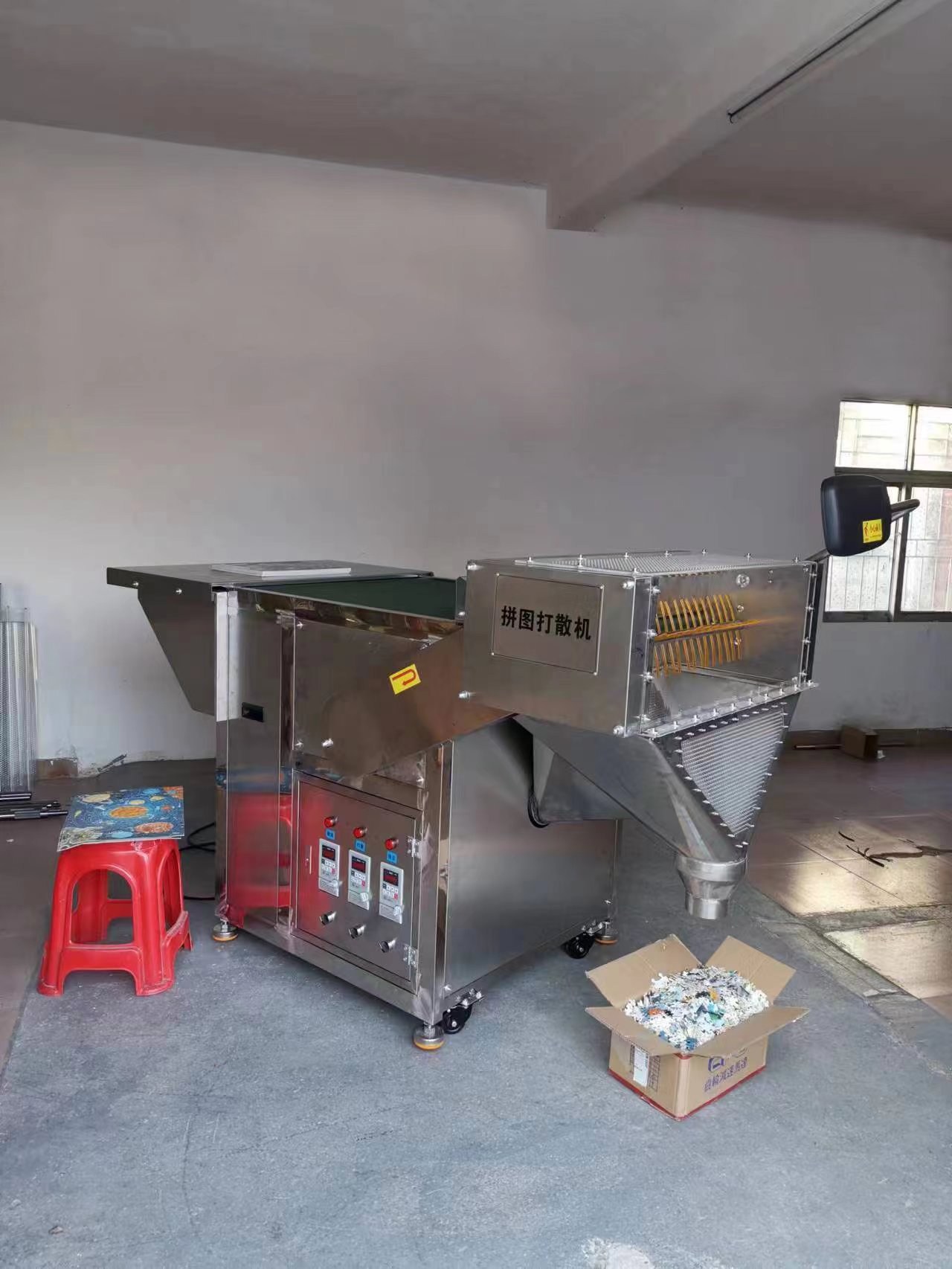
The essence of the fully automatic puzzle disassembly and packaging machine is a specialized robot integrating precision mechanical design, intelligent sensing technology, advanced algorithms, and control software. Its value lies not only in replacing human labor but also in creating the core experiential attribute of "randomness" in puzzle products in a scientific and reliable way, while ensuring absolute consistency in factory quality. For further information/advice regarding this equipment or to purchase other high-quality hydraulic presses, please contact us (or scan the WhatsApp QR code below). Jianlong Hydraulic Technology will provide you with personalized and customized professional solutions and is dedicated to serving you.

Contact: Miss.Li
Phone: 18822971180
Tel: 86-18822971180
Email: lifuyan78@gmail.com
Add: Guangyi Industrial Park, No. 2, Tanglip Jinfu West Road, Liaobu Town, Dongguan City, China
We chat