
lifuyan78@gmail.com
86-18822971180
The role of servo motors in modern hydraulic machinery can be summarized as: transforming the "extensive force" of traditional hydraulic systems into "precisely controllable intelligent force," serving as the core drive component for achieving high performance, high efficiency, and high reliability.
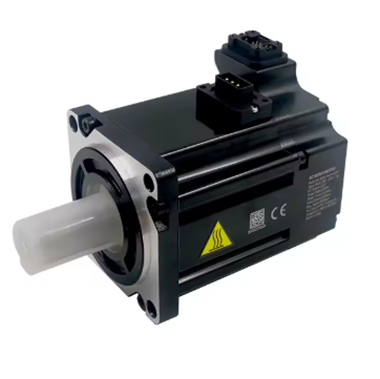
1. Core Function: Achieving "Intelligent Hydraulics" or "Electro-hydraulic Servo"
Traditional hydraulic systems use ordinary asynchronous motors to drive fixed-displacement or variable-displacement pumps, providing constant flow and pressure, and controlling actuators through proportional valves/servo valves. This method suffers from drawbacks such as high energy consumption, slow response, and limited control precision. The introduction of servo motors constitutes a unit of "servo motor + high-performance hydraulic pump" (often called a servo pump, variable-displacement pump system, or electro-hydraulic servo system). Its fundamental function is:
1.1 Precise Flow and Pressure Control:
◦ The servo motor receives commands (such as speed and torque) from the controller and steplessly adjusts its speed and output torque.
◦ The motor directly drives the hydraulic pump, thereby precisely controlling the pump's output flow and pressure. It provides the required amount of oil and the required pressure. "On-demand oil supply" has been achieved.
1.2 As the "Intelligent Heart" of the System:
◦ As shown in the diagram above, the servo motor is the core of the entire hydraulic power unit. It no longer simply spins at a constant speed, but intelligently adjusts its output according to the real-time demands of the load. This is similar to a car engine changing from a fixed RPM to stepless, precise control via the accelerator pedal (controller commands).
1.3 Key Elements of Closed-Loop Control:
◦ The servo motor itself is a precise closed-loop system (the motor has a built-in encoder that provides position/speed feedback).
◦ It forms a larger closed loop with external pressure sensors, position sensors, etc., enabling the entire hydraulic system to perform high-precision closed-loop control of position, speed, and pressure (force), achieving or even exceeding the performance of traditional "valve-controlled" systems.
2. Revolutionary Advantages
Compared to the traditional "asynchronous motor + fixed displacement pump + proportional valve" solution, servo motor-driven hydraulic systems offer significant advantages:
2.1 Extremely High Energy Efficiency (The Main Advantage):
◦ No Overflow Loss: During pressure holding, waiting, or low-speed phases, the servo motor can reduce speed to extremely low levels or even stop, resulting in near-zero pump output flow and theoretically zero overflow loss.
◦ Reduced Throttling Loss: Flow is supplied on demand, reducing energy loss through valve throttling.
◦ Reduced Cooling Requirements: Lower energy consumption means significantly reduced heat generation, allowing for a smaller or eliminated cooling system.
◦ Overall energy savings can reach 30%-80%, representing a core direction for the green upgrade of current hydraulic technology.
2.2 Excellent Dynamic Response and Control Precision:
◦ The servo motor's speed adjustment response is extremely fast (millisecond level), enabling rapid flow and pressure build-up in the hydraulic system, resulting in more agile machine movements.
◦ Combined with a high-response pump and closed-loop control, it can achieve micron-level position control and precise pressure/force control, meeting the demands of high-end precision processes.
2.3 Low Noise and Low Heat Generation:
◦ Operating at low speeds most of the time and avoiding the whistling of high-pressure overflow, overall noise levels are reduced by 10-20 decibels or more.
◦ Low heat generation extends the lifespan of hydraulic oil and seals, improving system reliability.
2.4 High Integration and Intelligence:
◦ The servo pump unit has a compact structure, making it easy to integrate into equipment.
◦ Supports bus control (such as EtherCAT, PROFINET), easily integrating with upper-level PLC/CNC systems for digital management and intelligent diagnostics.
3. Typical Application Scenarios in Hydraulic Machinery
3.1 Injection Molding Machines: This is the most successful application area. In each stage of mold clamping, injection, pressure holding, and cooling, the servo motor precisely provides the required pressure and flow, resulting in significant energy savings and improved product quality and repeatability.
3.2 Presses (Stamping, Die Casting, Forging):
◦ Achieves precise slider position control, multi-stage speed control, and a smooth pressurization process.
◦ High speed and low pressure during the rapid depressurization phase, low speed and high pressure during the molding phase, and precise control during the depressurization phase improve process quality and mold life.
3.3 Testing Machines (Fatigue Testing, Material Testing):
◦ For applications requiring precise force control and complex waveform simulation, servo hydraulic systems are ideal, providing a highly dynamic load spectrum.
3.4 Construction Machinery (Electrified Excavators, Cranes):
◦ In new energy construction machinery, battery-powered servo motors drive hydraulic pumps, achieving precise motion control and extremely high energy recovery efficiency.
3.5 Machine Tools (Hydraulic Stations): Provide stable and rapid-response power for fixtures, tool magazines, tool changing mechanisms, etc., improving processing efficiency.
4. System Composition and Key Selection Criteria
4.1 A typical servo motor hydraulic system includes:
• Servo motor (permanent magnet synchronous motor)
• Servo driver
• Dedicated hydraulic pump (usually an internal gear pump or piston pump, requiring high response and low pulsation)
• High-precision sensors (pressure sensors, encoders)
• Controller
4.2 Key Selection Criteria: The torque-speed characteristics of the motor and the displacement-pressure requirements of the hydraulic pump must be comprehensively considered to ensure that the motor can provide sufficient power throughout the entire operating range, while the driver capacity must be sufficient.
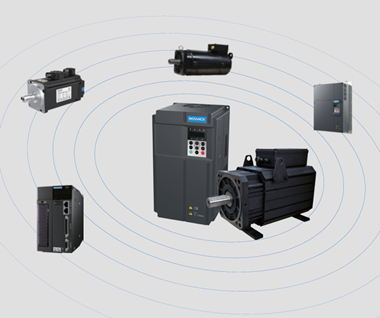
The role of servo motors in hydraulic machinery is essentially the deep empowerment of traditional fluid power systems by precise power electronic control technology. It solves the long-standing pain points of high energy consumption, low precision, and high noise in hydraulic systems, driving the hydraulic industry towards high efficiency, precision, intelligence, and green development. It is a key technology for high-end equipment and energy-saving retrofits. For more information/advice on servo motors or to purchase other high-quality hydraulic presses, please contact us (or scan the following WhatsApp QR code). Jianlong Hydraulic Technology will provide you with personalized and customized professional solutions and is dedicated to serving you.

Contact: Miss.Li
Phone: 18822971180
Tel: 86-18822971180
Email: lifuyan78@gmail.com
Add: Guangyi Industrial Park, No. 2, Tanglip Jinfu West Road, Liaobu Town, Dongguan City, China
We chat