
lifuyan78@gmail.com
86-18822971180
DC servo motors play a crucial role in applications requiring precise speed, position, or torque control due to their excellent speed regulation performance, high starting torque, and fast response. Their core workflow is "closed-loop feedback control." Below is a summary from Jianlong Hydraulic Technology for your reference!
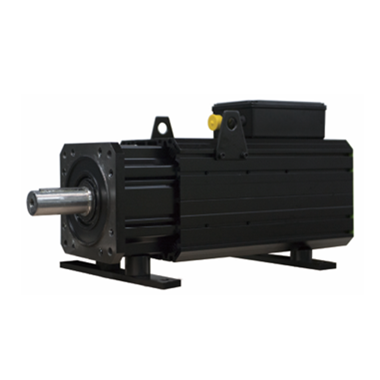
1. Core Workflow: Closed-Loop Feedback Control
A DC servo motor system is not an isolated motor, but a precise closed-loop system composed of a controller, driver, motor, and sensor. Its workflow is a continuous "sensing-comparison-adjustment" cycle. The following are detailed steps:
1.1 Command Input: The host controller (such as a PLC, CNC, or motion control card) sends a target command (e.g., to run at 3000 rpm or move to a position 1000 pulses) to the servo driver according to process requirements.
1.2 Driving and Execution: After receiving the command, the servo driver converts the control signal into powerful pulse width modulation (PWM) voltage and current, driving the DC servo motor to rotate. The motor drives the actuator (such as a robotic arm, conveyor belt, or tool holder) through a coupling or transmission mechanism.
1.3 Real-time Sensing (Feedback): Sensors (usually encoders or tachogenerators) mounted on the motor shaft (or load end) monitor the motor's actual status in real time (e.g., current speed, angle rotated, current position).
1.4 Comparison and Calculation (Closed-Loop Formation): The servo drive contains a comparator that compares the actual value fed back from the sensor with the target value given by the host computer in real time, calculating the deviation (error) between the two.
1.5 Intelligent Adjustment (PID Control): The core PID control algorithm (proportional-integral-derivative) of the drive immediately calculates based on the magnitude and trend of this "deviation".
◦ Proportional (P): Adjusts according to the current deviation magnitude. Larger deviations result in larger adjustments.
◦ Integral (I): Accumulates historical deviations, eliminating static errors (such as persistent small positional differences).
◦ Derivative (D): Predicts the deviation trend, suppressing overshoot and oscillations, making the system more stable.
The algorithm outputs a new, optimized control command, adjusting the PWM output to change the motor's torque and speed.
1.6 Continuous Loop: This process repeats continuously at an extremely high frequency (typically milliseconds or even microseconds), forming a dynamic, real-time closed loop. The system continuously uses feedback to correct its actions until the deviation between the actual and target values approaches zero, thus achieving precise control.Core Principle: The essence of a DC servo motor lies in this closed loop. It gives the system the ability to "self-correct," resisting external disturbances such as load changes and voltage fluctuations, ultimately achieving high precision and stability unattainable by ordinary motors.
2. Typical Application Areas
DDC servo motors, with their core advantages, are widely used in the following fields requiring high dynamic performance and control precision:
2.1 Industrial Automation and Robotics
• Industrial Robots: Joint drive, enabling precise, fast, and smooth point-to-point and trajectory movements of the robotic arm.
• CNC Machine Tools: Driving the feed axis and spindle of the tool holder to achieve precision machining (turning, milling, drilling).
• Automated Assembly Lines: Used for positioning in precision assembly, screw fastening, dispensing, welding, and other workstations.
• Material Handling: Controls the precise start and stop and indexing positioning of conveyor belts.
2.2 Precision Instruments and Special Equipment
• Radar and Satellite Antennas: Performs high-precision azimuth and elevation angle tracking and positioning.
• Telescopes: Drives astronomical telescopes to track celestial objects smoothly, at low speeds, and with high precision.
• Medical Equipment: Used in CT scanner gantry rotation, surgical robots, high-speed centrifuges, etc.
2.3 Military and Aerospace
• Missile Servo Control: Quickly and precisely adjusts flight attitude.
• Aircraft Control Surfaces: Serves as an actuator in fly-by-wire control systems.
• Stabilized Platforms: Used in shipborne and airborne equipment to isolate carrier sway and maintain platform stability.
2.4 Office Automation and Special Consumer Goods
• High-Performance Printers/Plotters: Precisely controls the movement of printheads or paper.
• High-Performance Cameras: Used for lens autofocus and optical image stabilization systems.
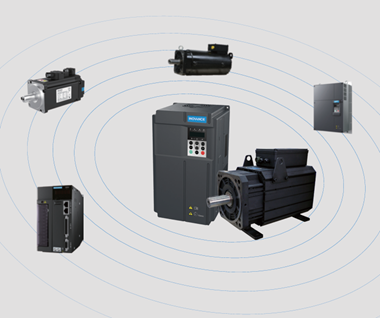
Currently, despite the superior performance of DC servo motors, AC permanent magnet synchronous servo motors (often simply called servo motors) have become the mainstream in the market due to their advantages in maintainability, efficiency, and power density. However, in certain specific applications requiring extremely high dynamic response and huge starting torque, especially in high-power applications, DC servo motors still hold an irreplaceable position. For more information/advice on servo motors or to purchase other high-quality hydraulic presses, please contact us (or scan the WhatsApp QR code below). Jianlong Hydraulic Technology will provide you with personalized and customized professional solutions and is dedicated to serving you.

Contact: Miss.Li
Phone: 18822971180
Tel: 86-18822971180
Email: lifuyan78@gmail.com
Add: Guangyi Industrial Park, No. 2, Tanglip Jinfu West Road, Liaobu Town, Dongguan City, China
We chat