
lifuyan78@gmail.com
86-18822971180
Screw air compressors are currently the most widely used mainstream models in the industrial sector; they represent a distinct technological approach compared to the piston compressors discussed previously. If a piston compressor is like a sprinter that needs to catch its breath, a screw compressor is a "marathon runner" capable of running non-stop, 24 hours a day.
Their core advantage lies in the ability to supply compressed air consistently, stably, and efficiently over the long term. Comparing them to the piston compressors we discussed earlier makes the distinction clearer. Below, the team at Jianlong Hydraulic Technology shares some insights to assist with your purchasing decisions!
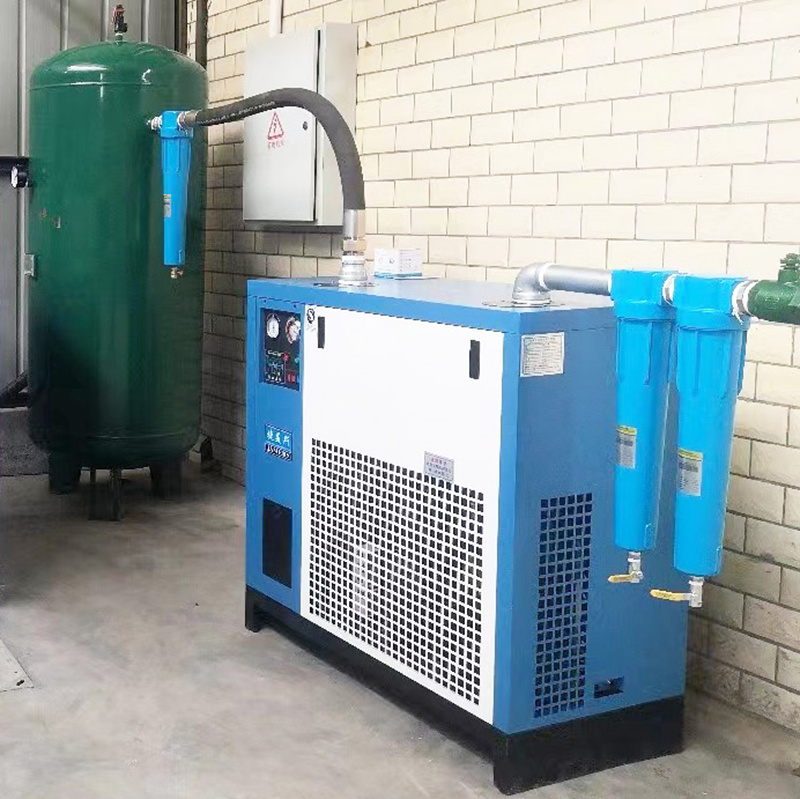
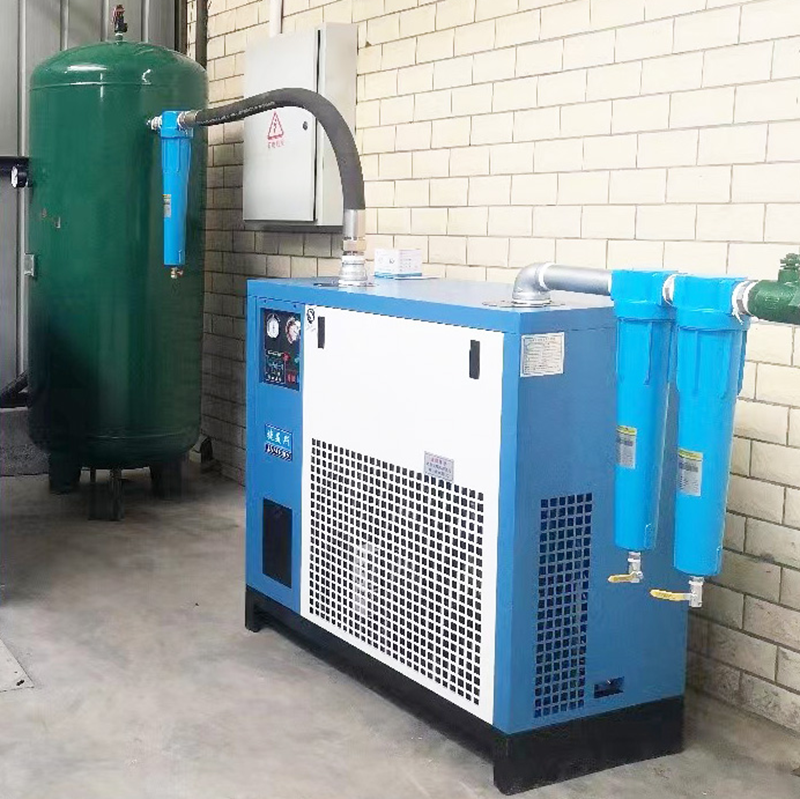
1. Working Principle and Core Structure
The heart of a screw air compressor consists of a pair of intermeshing helical rotors (commonly known as male and female rotors); their high-speed rotation facilitates gas intake, compression, and discharge. Based on whether lubricating oil is injected into the compression chamber, they fall into two main categories:
1.1 Oil-injected screw air compressors: This is the most common type. Large amounts of lubricating oil are injected during compression, serving four key functions: cooling, lubrication, sealing, and noise reduction. They offer high compression efficiency and low discharge temperatures, though the compressed air contains trace amounts of oil (typically 2–5 ppm), requiring downstream treatment.
1.2 Oil-free screw air compressors: No lubricating oil is used in the compression chamber, allowing for the delivery of 100% pure compressed air. However, the absence of liquid cooling results in high discharge temperatures, and the lifespan of core components—along with higher costs—are the primary drawbacks.
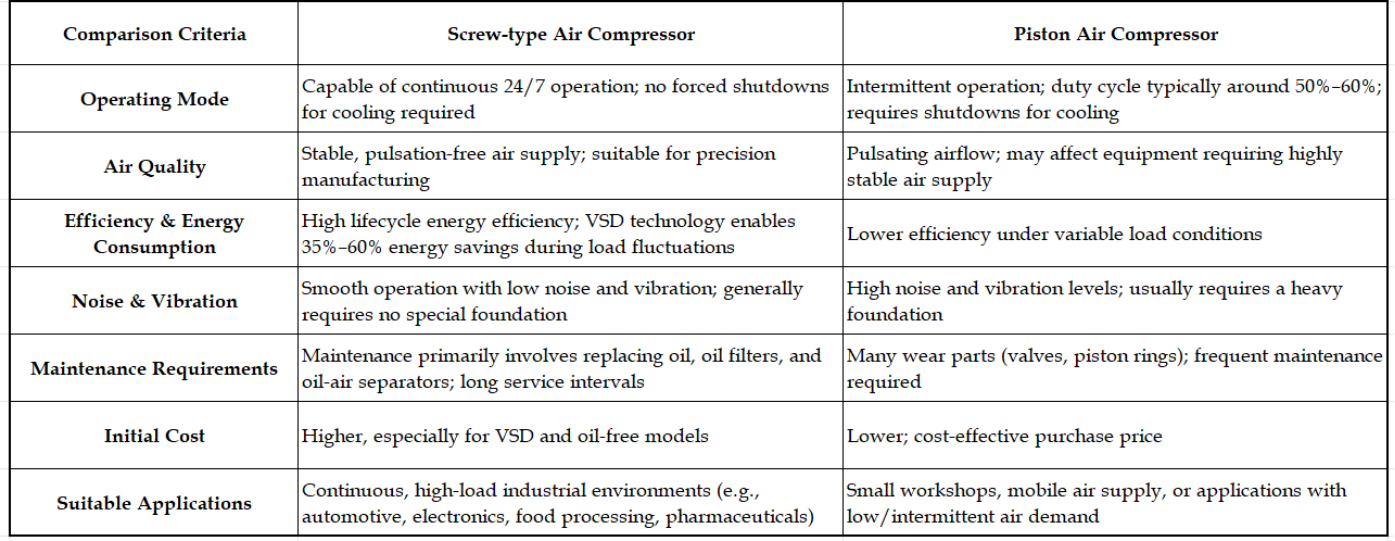
2. Screw vs. Piston Compressors: Key Advantages and Trade-offs
Due to their fundamentally different working principles, screw compressors hold advantages over piston compressors in many areas, particularly for continuous production environments.
3. Key Selection Criteria
When selecting a screw compressor for your workshop or production line, the following decision points are crucial:
3.1 Clarify "oil content" requirements: This is the primary factor determining the type of compressor you need. If you operate in industries such as food processing, pharmaceuticals, or precision electronics, oil-free models are mandatory; however, for general machining or air-purging applications, oil-injected models offer a more cost-effective solution.
3.2 Consider air demand fluctuations: If your production air consumption varies significantly (e.g., due to multiple shifts or load differences across time periods), a Variable Speed Drive (VSD) model is highly recommended. Although the initial investment is higher, the energy savings are substantial, often allowing the cost to be recouped quickly through reduced electricity bills.
3.3 Balance budget and efficiency: If air demand is highly stable with no significant troughs, a fixed-speed screw compressor may suffice, offering a lower initial investment.
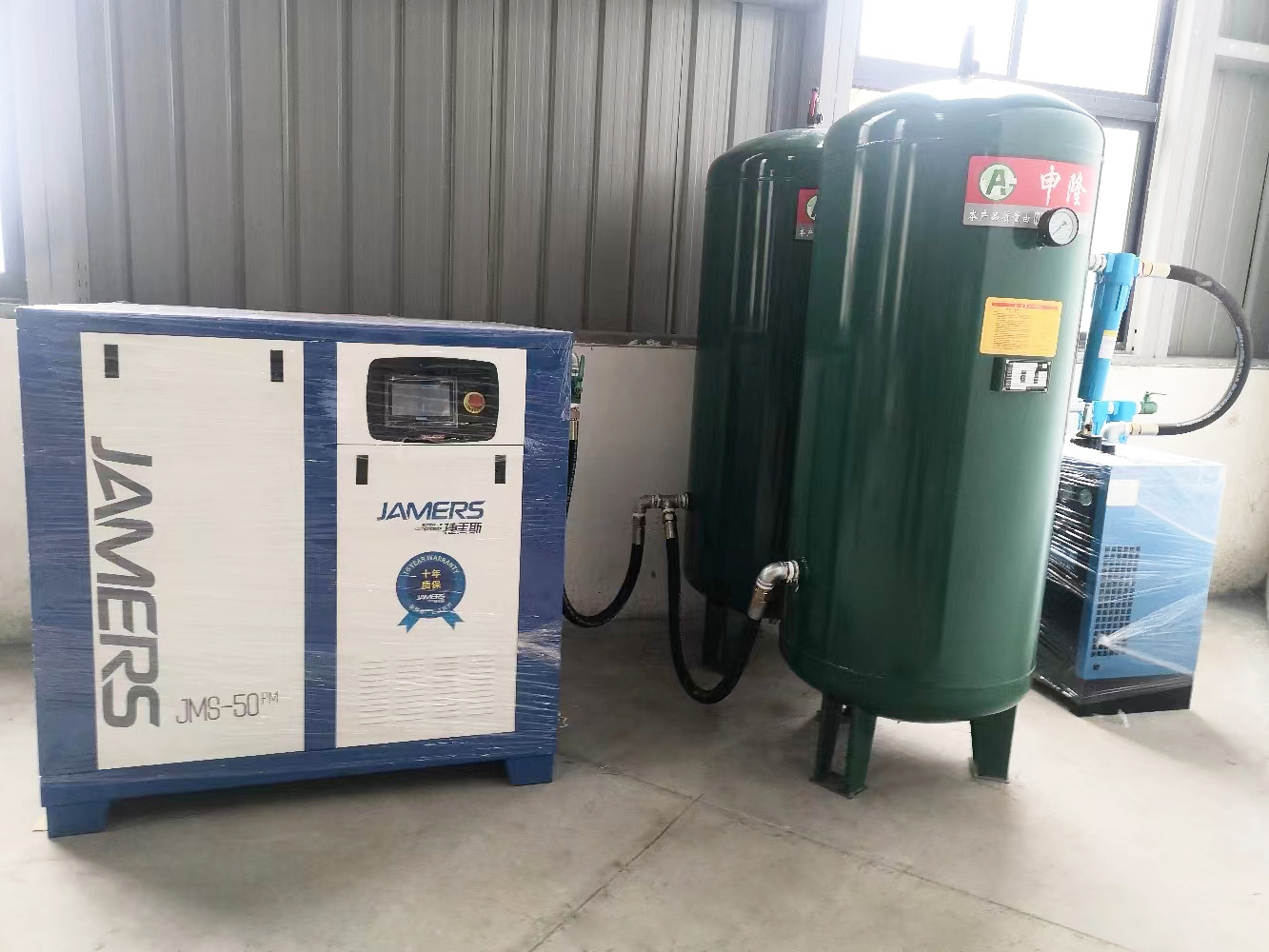
Screw air compressors are the ideal choice for production environments requiring continuous, stable, and efficient operation. There is no absolute "better or worse" when comparing them to piston compressors; the choice depends on your specific production requirements regarding continuous run-time and operating costs. If you have specific procurement needs, please let us know, and we will help analyze the suitability of the equipment for your operations. For further consultation or to make a purchase (please scan the WhatsApp QR code below), Jianlong Hydraulic Technology is ready to provide you with personalized, customized professional solutions and dedicated service.

Contact: Miss.Li
Phone: 18822971180
Tel: 86-18822971180
Email: lifuyan78@gmail.com
Add: Guangyi Industrial Park, No. 2, Tanglip Jinfu West Road, Liaobu Town, Dongguan City, China
We chat