
lifuyan78@gmail.com
86-18822971180
The acceptance of a piston rod focuses primarily on sealing reliability and smooth motion, while the acceptance of a guide pillar centers on guidance precision and wear resistance. The following insights are provided by the team at Jianlong Hydraulic Technology—please feel free to reach out with any inquiries!
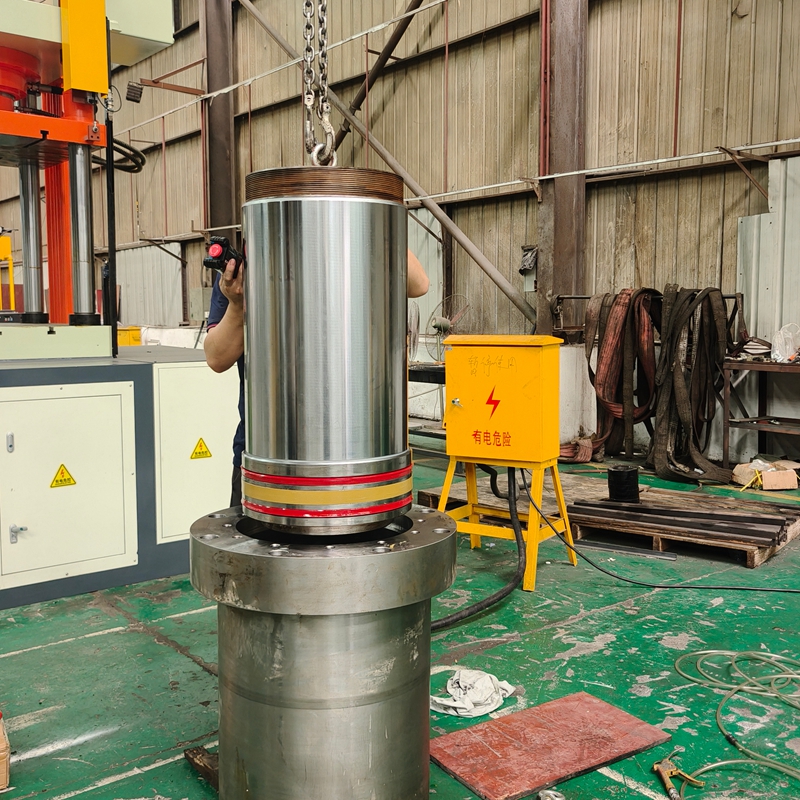
1. Acceptance Criteria for Hydraulic Cylinder Piston Rods
Acceptance should be based on the standard JB/T 10205.3-2020, "Hydraulic Cylinders – Part 3: Technical Specifications for Piston Rods." Key technical parameters include:
1.1 Surface Roughness: After chrome plating, the working surface should achieve a roughness of Ra ≤ 0.4 μm. Some stringent tender specifications may require an even finer finish (within Ra 0.4); excessive roughness will directly damage (score) the seals.
1.2 Straightness: This is critical for preventing off-center loading. Standard requirements typically specify a straightness tolerance for the generatrix of no more than 1000:0.1 (i.e., 0.1 mm per meter), with a total deviation not exceeding 0.25 mm over the entire length.
1.3 Dimensional and Geometric Tolerances: The outer diameter tolerance for the guiding section should generally be no less precise than f7; the roundness tolerance should meet at least Grade 8 as per GB/T 1184.
1.4 Plating Quality: If chrome plating is used for corrosion and wear resistance, the coating thickness should be at least 0.08 mm. Additionally, the adhesion of the plating must be verified to prevent it from peeling off due to vibrations during the stamping process.
2. Acceptance Criteria for Guide Pillars
Guide pillars must balance hardness with fit precision to ensure accurate alignment during stamping.
2.1 Surface Hardness: The working surface of a guide pillar requires high wear resistance, typically specified at HRC 58–62 (or HV 600–750 on the Vickers scale). The depth of the hardened layer must be sufficient to withstand long-term reciprocating friction. 2.2 Surface Roughness: It is recommended that the surface roughness (Ra) of mating working surfaces be controlled to ≤ 0.4 μm, while non-working surfaces may have a higher limit of Ra ≤ 1.6 μm, in order to minimize wear and prevent galling.
2.3 Straightness and Dimensions: The straightness tolerance over the entire length should ideally be ≤ 0.02 mm/m; the diameter tolerance for reference sections is typically specified according to the H6 precision grade.
2.4 Mating Clearance (measured after assembly): A sliding fit of H7/h6 is generally used between guide pillars and guide sleeves (or mold plate bores). For precision stamping, the unilateral clearance should be maintained between 0.005 mm and 0.015 mm; excessive clearance can cause the punch to wobble, while insufficient clearance may lead to seizing.
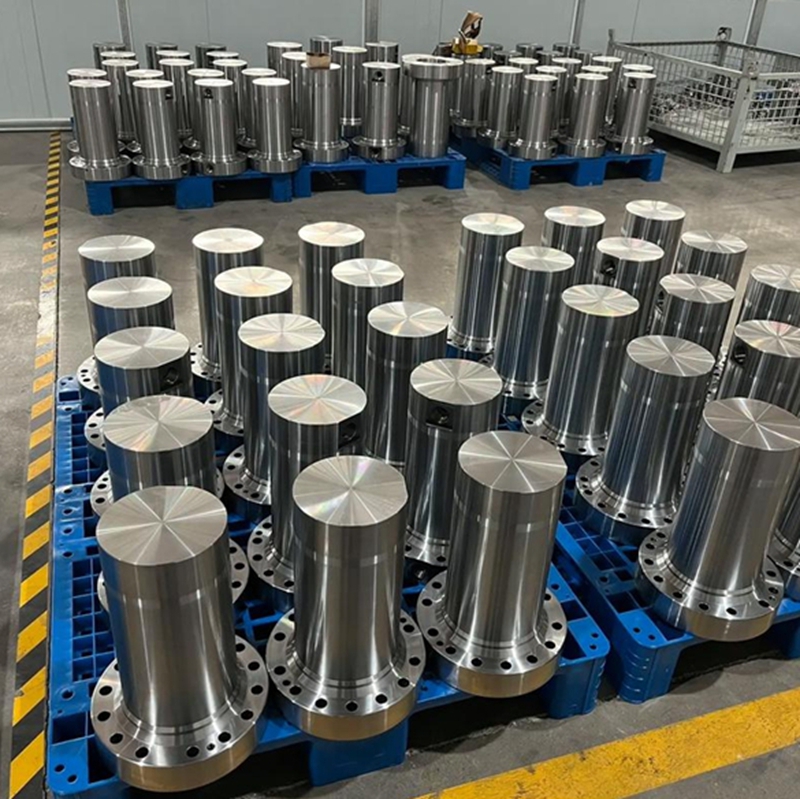
Please contact us for further consultation or discussion regarding the inspection of hydraulic press piston rods and guide pillars. Jianlong Hydraulic Technology offers customized frame-style hydraulic presses with capacities ranging from 100 to 5,000 tons. We possess mature technology and extensive experience, with capabilities to provide integrated solutions—including automated production lines, chillers, and air compressors. All our hydraulic presses are CE-certified and fully compliant with the EU Machinery Directive (2006/42/EC). Our products are exported to various countries across Europe and the Americas, including Germany, the United States, Mexico, and Portugal. Should you have any questions or procurement requirements, please reach out to us (or scan the WhatsApp QR code below). Jianlong Hydraulic Technology is dedicated to providing you with personalized, customized, and professional solutions.

Contact: Miss.Li
Phone: 18822971180
Tel: 86-18822971180
Email: lifuyan78@gmail.com
Add: Guangyi Industrial Park, No. 2, Tanglip Jinfu West Road, Liaobu Town, Dongguan City, China
We chat