
lifuyan78@gmail.com
86-18822971180
An air compressor is a piece of power equipment that converts the mechanical energy of an electric motor or internal combustion engine into gas pressure energy. You can think of it as an "air factory": it "inhales" air at ambient temperature and pressure, compresses it, and then "exhales" it, providing us with compressed air that possesses both pressure and kinetic energy. The following information is provided by the team at Jianlong Hydraulic Technology to assist you with your purchasing decisions!
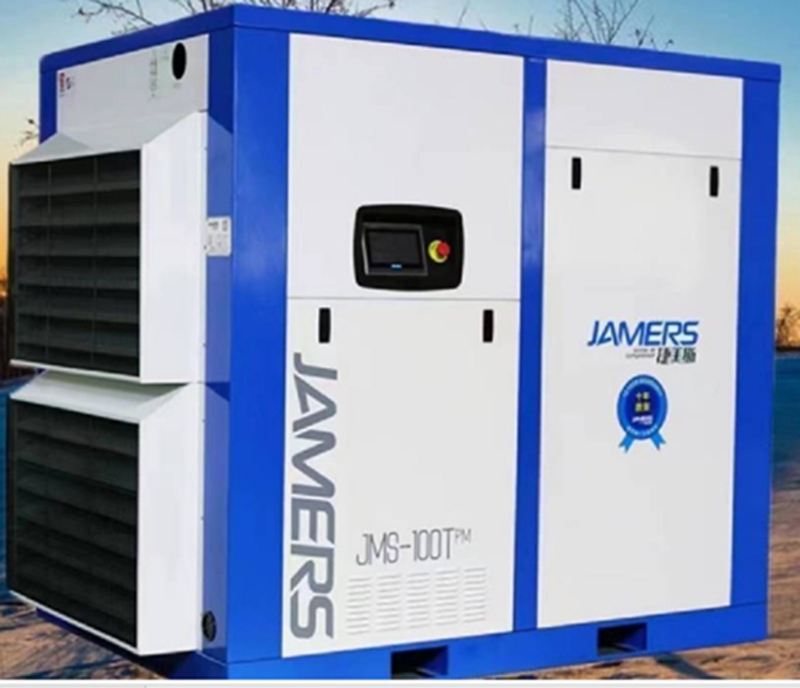
1. Working Principle: Three Core Steps
The operation of the vast majority of industrial air compressors follows a similar logic. Taking the most common reciprocating piston air compressor as an example, it operates through a cycle of three steps: "intake, compression, and discharge":
1.1 Intake Process: The piston moves downward, increasing the volume inside the cylinder and lowering the pressure; atmospheric pressure pushes open the intake valve, allowing outside air to enter the cylinder.
1.2 Compression Process: The piston reverses direction and moves upward; both the intake and discharge valves are closed, compressing the air inside the cylinder, reducing its volume, and continuously raising the pressure.
1.3 Discharge Process: When the pressure inside the cylinder becomes high enough to overcome the spring force of the discharge valve, the valve is forced open, and the high-pressure compressed air is discharged into an air receiver tank or distribution pipeline.
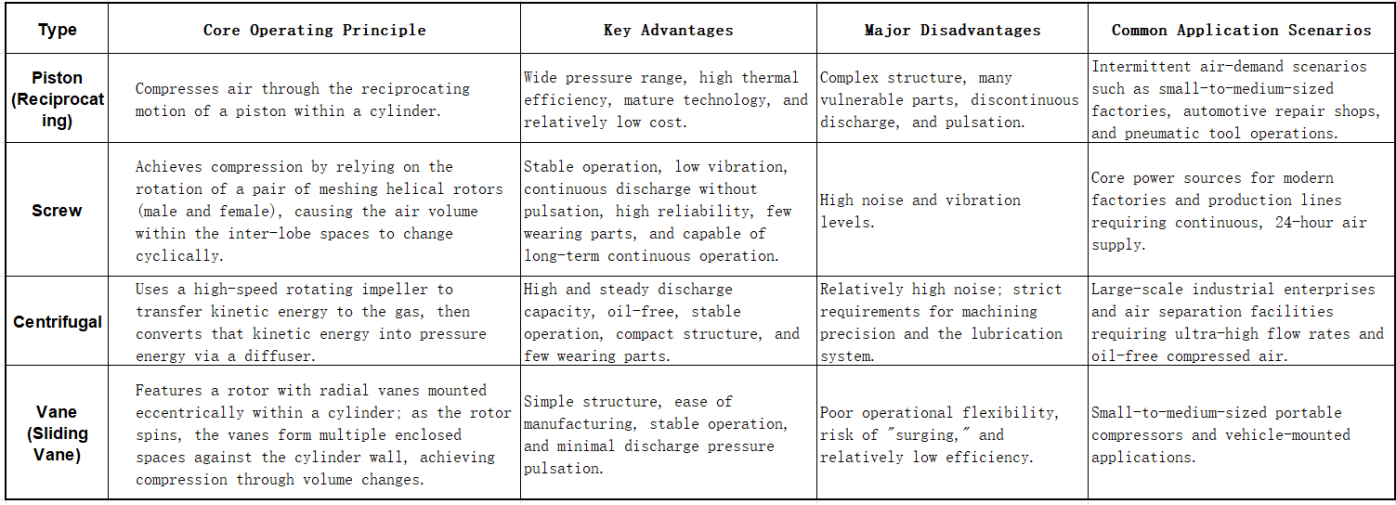
2. Main Classifications and Characteristics
There are various types of air compressors, each with its own unique working principle and application scenarios. A comparison follows:
3. Key Performance Parameters
When purchasing or evaluating an air compressor, it is important to consider the following core parameters:
3.1 Discharge Pressure: Refers to the pressure of the compressed air ultimately discharged by the compressor. Common units include Megapascals (MPa) and bars. Generally, the operating pressure for pneumatic systems ranges from 0.4 to 0.8 MPa.
3.2 Discharge Capacity (Volumetric Flow Rate): Refers to the volume of gas discharged by the final stage of the compressor per unit of time, converted to the intake conditions (temperature and pressure) of the first stage. It represents the compressor's "air supply capacity," and the common unit of measurement is m³/min (cubic meters per minute). 3.3 Other parameters: These include discharge temperature, pressure dew point (a measure of compressed air dryness), and oil content in the discharge air (particularly important for applications requiring high air quality).
4. Important auxiliary components of an air compression system
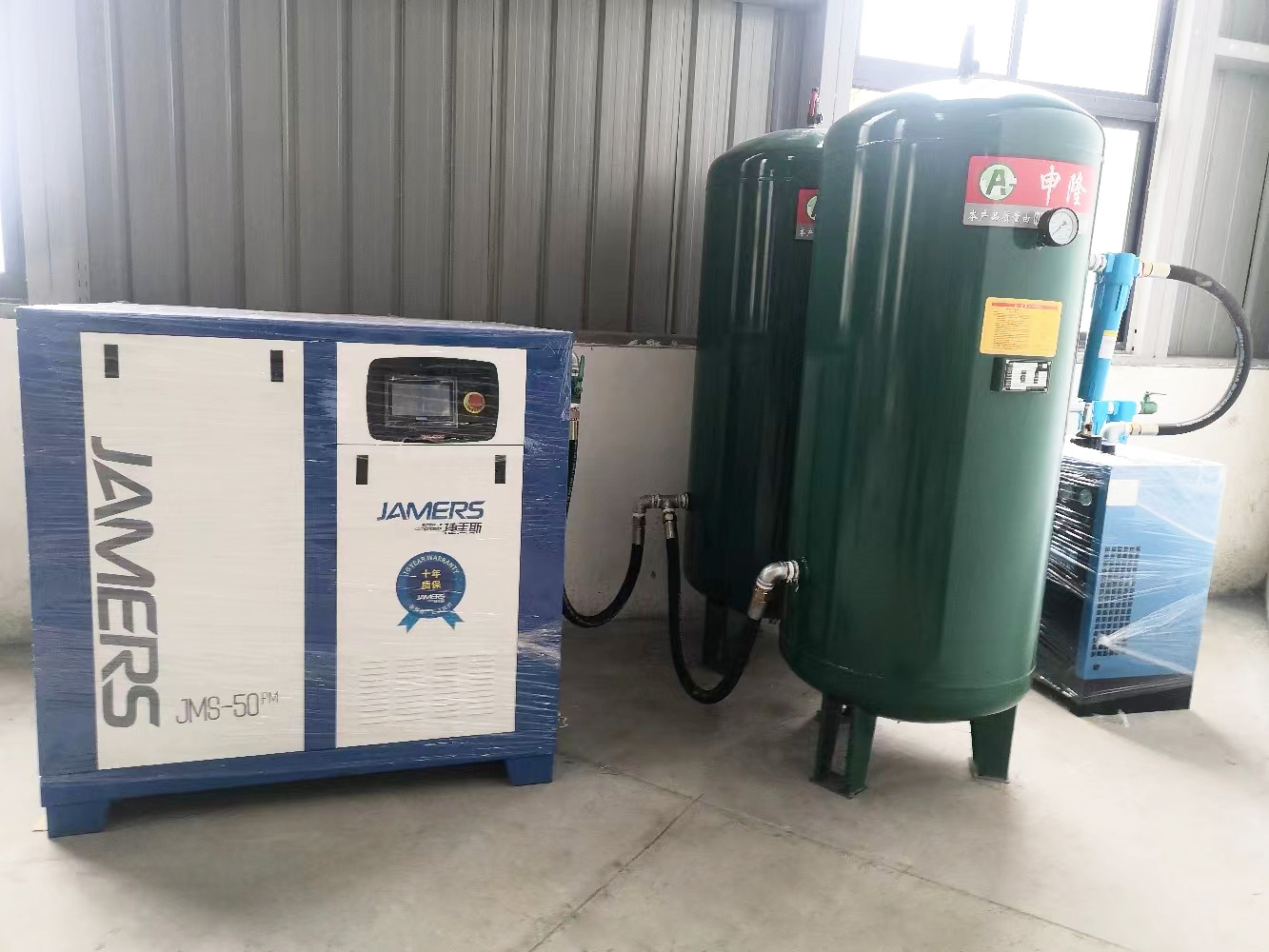
A complete air supply system typically requires two key components in addition to the air compressor unit itself:
4.1 Air receiver tank: Acts like an "air bank." It stores compressed air, buffers pressure fluctuations in the pipeline to ensure a stable supply to equipment, and allows the compressed air to cool further, facilitating the separation of some moisture and oil. The recommended volume for the tank is generally at least one-third of the compressor's rated air delivery (capacity) per minute.
4.2 Post-treatment equipment: Includes refrigerated or adsorption dryers for moisture removal, as well as precision filters for removing oil, water, and solid particles. Their function is to purify the compressed air to meet the cleanliness standards required by various industrial processes.
5. Application areas: Ubiquitous "behind-the-scenes heroes"
Compressed air is the second most important industrial power source after electricity; consequently, air compressors are widely used across various sectors:
5.1 Industrial automation and power: Powers pneumatic tools (such as air picks and pneumatic wrenches), pneumatic fixtures, robotic arms on automated production lines, and pneumatic cylinders.
5.2 Surface treatment: Provides the power source for equipment used in sandblasting, spray painting, and coating processes.
5.3 Other fields: Used for instrumentation control, vehicle braking systems, textile manufacturing (air-jet looms), mixing in food and pharmaceutical processing, and even specialized applications like submarine buoyancy control and missile launching.
If you have specific requirements for purchasing an air compressor, please let us know, and we will help analyze its suitability for your needs. For further consultation or to make a purchase (please scan the WhatsApp QR code below), Jianlong Hydraulic Technology is dedicated to providing you with personalized, customized, and professional solutions. We look forward to serving you.

Contact: Miss.Li
Phone: 18822971180
Tel: 86-18822971180
Email: lifuyan78@gmail.com
Add: Guangyi Industrial Park, No. 2, Tanglip Jinfu West Road, Liaobu Town, Dongguan City, China
We chat