
lifuyan78@gmail.com
86-18822971180
The mechanical crank press is the most widely used and technologically mature piece of equipment in the field of cold stamping. Its core mechanism utilizes a crank-connecting rod assembly to convert rotary motion into the linear reciprocating motion of the slide, enabling processes such as blanking, bending, and shallow drawing of sheet metal. The following information is provided by the team at Jianlong Hydraulic Technology for your reference:
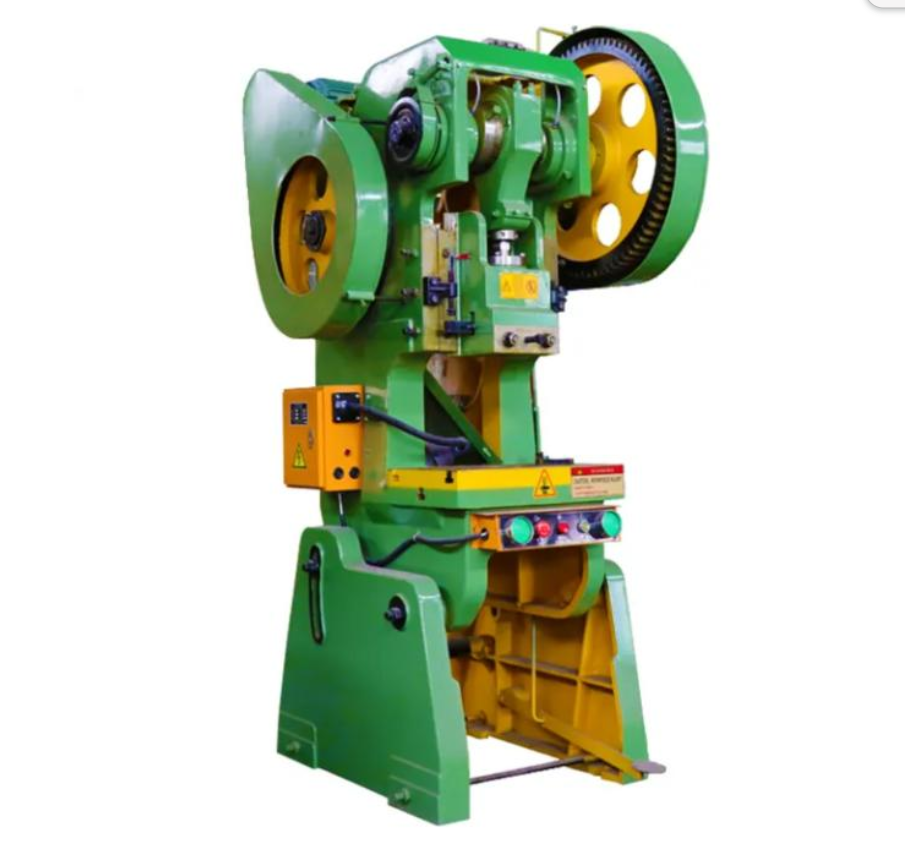
1. Core Working Principle
1.1 The motor drives the pulley and flywheel (the flywheel stores energy and releases a large amount of power during the instant of stamping);
1.2 The clutch engages, transmitting power to the crankshaft via gear reduction;
1.3 The rotating crankshaft uses the connecting rod to convert circular motion into the vertical reciprocating linear motion of the slide;
1.4 The slide drives the upper die to close against the lower die on the bolster (worktable), applying high pressure to the sheet metal to achieve plastic deformation;
1.5 The brake controls the precise starting and stopping of the slide, while the balance cylinder counteracts the dead weight of the slide and upper die to reduce impact.
2. Main Structural Components
2.1 Press Frame: Open type (C-frame; convenient operation; suitable for small to medium tonnage) and Closed type (frame-style; high rigidity; suitable for high tonnage/high precision);
2.2 Crank-Connecting Rod Mechanism: Crankshaft, connecting rod, and slide; the core of motion conversion;
2.3 Drive System: Motor, flywheel, clutch, brake, and reduction gears;
2.4 Worktable and Die Base: Mounts the lower die; features T-slots for convenient clamping;
2.5 Safety and Auxiliary Systems: Two-hand control buttons, safety guards, die cushions/ejection devices, and balancing systems.
3. Classification and Typical Applications
3.1 By Frame Type: Open-frame (single-point, double-point); Closed-frame (single-point, double-point/four-point);
3.2 By Tonnage: Small (<100 tons: electronics, small hardware); Medium (100–1,000 tons: home appliances, auto parts); Large (>1,000 tons: automotive body panels);
3.3 Typical Processes: Blanking (shearing, punching), bending, flanging, shallow drawing, coining, cold extrusion;
3.4 Industries: Automotive manufacturing, electronics & appliances, hardware & tools, aerospace, household metal products.
4. Advantages and Disadvantages
4.1 Advantages: Mature and reliable structure, stable operation, high stamping precision, suitable for continuous automated production, low maintenance costs;
4.2 Disadvantages: Limited range for stroke and speed adjustment, unsuitable for ultra-deep drawing; high-tonnage equipment is bulky and consumes significant energy.
5. Safety and Maintenance Essentials
5.1 Must be equipped with two-hand controls, photoelectric safety guards, and protective covers; unauthorized single-operator use is strictly prohibited;
5.2 Regularly inspect the clutch, brake, and lubrication system to prevent jamming or sticking;
5.3 Ensure precise alignment during die installation to avoid off-center loading that could damage the equipment or the die.
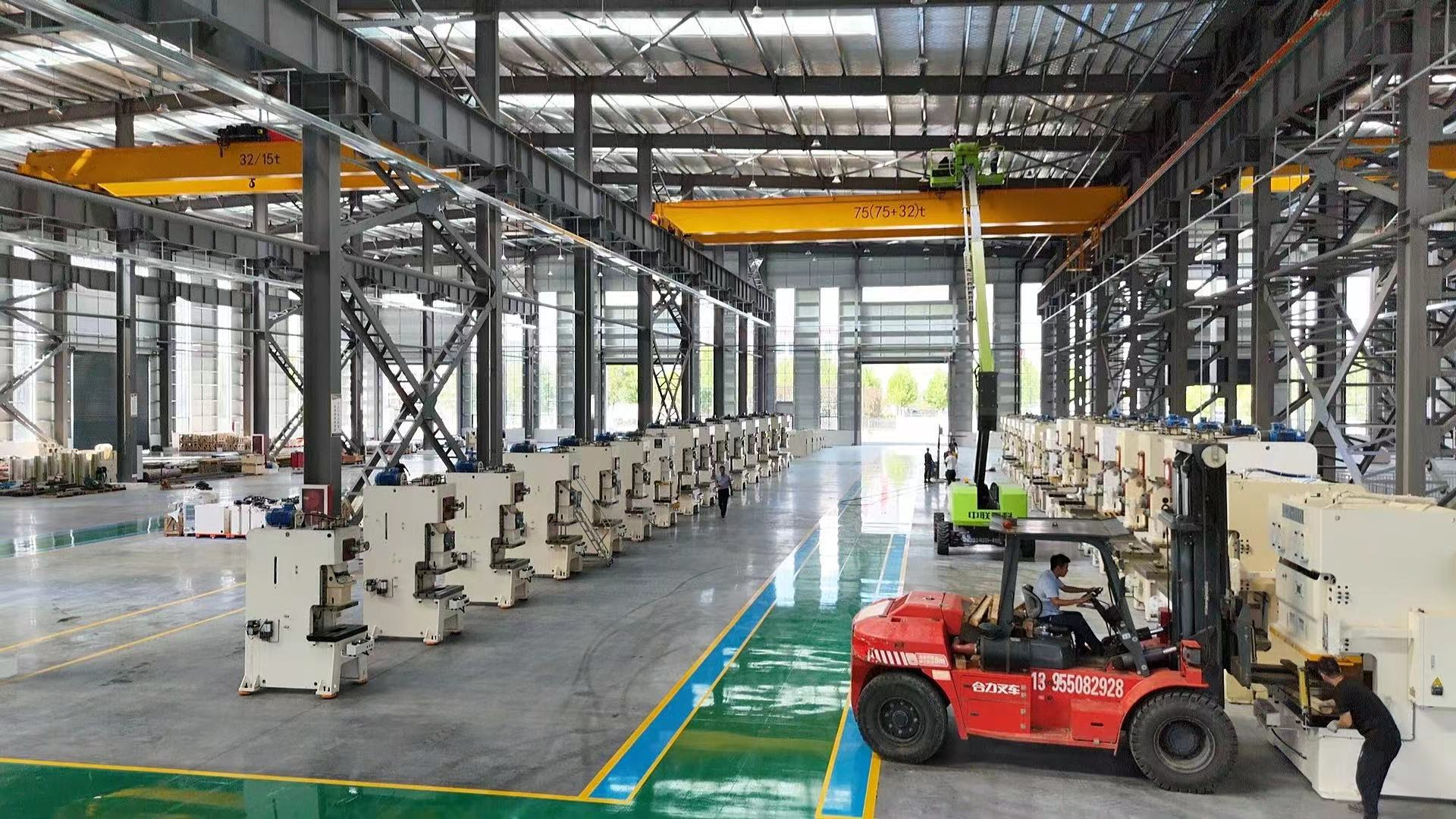
If needed, we can provide a checklist of key parameters for selecting a crank press (tonnage, stroke, strokes per minute, shut height, precision grade) to help you compare different models—please contact us. Our machines are CE certified and fully compliant with the EU Machinery Directive (2006/42/EC); our products are exported to markets in Europe and the Americas, including Germany, the USA, Mexico, and Portugal. For inquiries or purchasing needs, please scan the WhatsApp QR code below; Jianlong Hydraulic Technology is dedicated to providing you with personalized, customized professional solutions.

Contact: Miss.Li
Phone: 18822971180
Tel: 86-18822971180
Email: lifuyan78@gmail.com
Add: Guangyi Industrial Park, No. 2, Tanglip Jinfu West Road, Liaobu Town, Dongguan City, China
We chat