
lifuyan78@gmail.com
86-18822971180
In the vacuum coating industry, an industrial chiller is not merely an optional accessory but a core support system essential for ensuring product quality and the stable operation of equipment. Its primary function is to supply precision, constant-temperature circulating cooling water to critical components of the vacuum coating machine that generate significant heat during the process. This stable thermal management directly determines the quality of the final product and the continuity of production. The following insights are provided by the team at Jianlong Hydraulic Technology to assist you with your purchasing decisions!
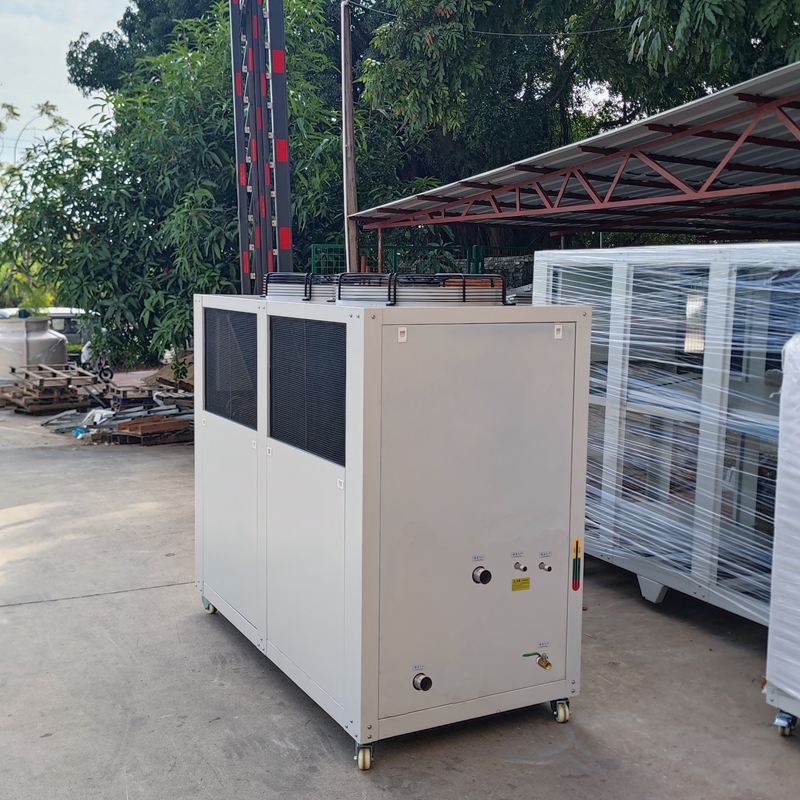
1. Why is a chiller necessary? What happens if cooling is inadequate?
Vacuum coating processes—particularly the currently dominant magnetron sputtering technology—generate immense heat. Failure to effectively cool the following key components can lead to serious consequences:
1.1 Sputtering Target: During magnetron sputtering, the target material is bombarded by high-energy particles, generating high temperatures. Uneven or insufficient cooling can cause the target to deform, crack, or corrode, directly affecting the sputtering rate and film uniformity. Additionally, the "sputtering gun" used to generate the magnetic field requires water cooling; otherwise, high temperatures can cause it to deform.
1.2 Vacuum Pump Set: The pump sets that maintain the high-vacuum environment generate significant heat during operation; timely heat dissipation is required to ensure pumping efficiency and operational lifespan.
1.3 Substrate (Workpiece): Excessive substrate temperature can induce thermal stress in the deposited film, reduce adhesion between the film and the substrate, and even alter the film's crystalline structure and final performance.
2. How does a chiller work? What are its core advantages?
Compared to traditional cooling methods like tap water or cooling towers, the core advantages of industrial chillers lie in control and stability:
2.1 Supply of cooling water with constant temperature, pressure, and flow: Chillers can precisely control the cooling water temperature within a set range (e.g., a common adjustable range of +3°C to 35°C), independent of external ambient temperatures or seasonal changes. This is crucial for coating processes that demand high consistency. 2.2 High-precision temperature control: High-quality chillers offer temperature control precision ranging from ±0.1°C to ±1°C; such precision is fundamental to ensuring consistent product quality across every batch.
2.3 Independent and stable refrigeration system: It operates as a completely independent closed-loop system where cooling water is recirculated, resulting in water savings over the long term.
3. Key considerations for selection and configuration
When selecting an industrial chiller for vacuum coating applications, several key factors are typically considered:
3.1 Temperature control precision: This is a core performance indicator. High-end models can achieve exceptional precision of ±0.1°C, while general industrial applications typically range from ±0.3°C to ±1°C.
3.2 Cooling capacity and model type: Cooling capacities vary widely—from a few hundred watts to tens of kilowatts—and must be matched to the heat output of the coating equipment. Configuration options include air-cooled units (easy to install, suitable for small-to-medium equipment) and water-cooled units (higher efficiency, suitable for large factories with cooling towers). Split-system designs are also available, allowing the heat-generating compressor unit to be placed outdoors to reduce noise and heat buildup within the workshop.
3.3 Water quality and protection: For precision coating applications, some chillers feature optional filtration systems or require deionized water to prevent pipeline scaling or contamination that could compromise coating quality. Additionally, comprehensive protection and alarm functions (such as compressor overload, low water flow, and phase loss/reversal protection) are crucial for ensuring safe, long-term equipment operation.
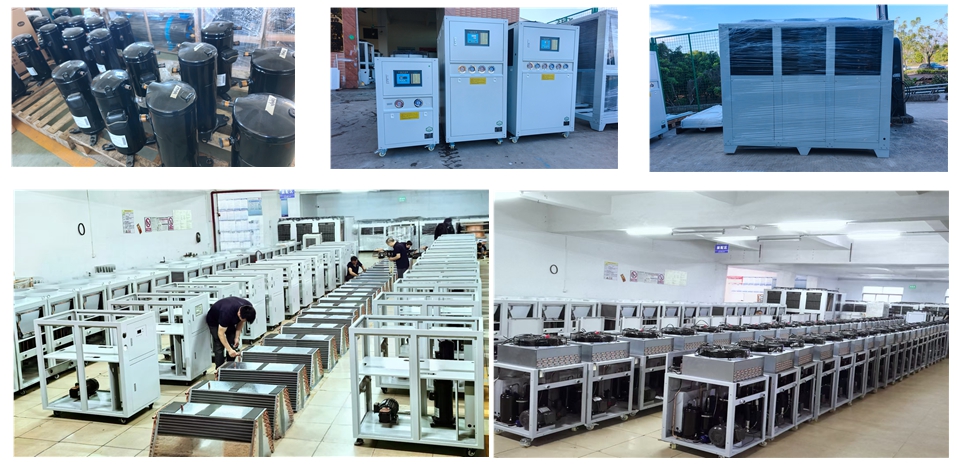
Are you currently planning a new production line or retrofitting an existing one? Could you share the type of coating machine (e.g., magnetron sputtering or evaporation coating) and the approximate chamber dimensions? With this information, we can help you more accurately estimate the required cooling capacity and avoid selecting a unit that is either oversized or undersized. Please contact us for further consultation regarding industrial chillers. Jianlong Hydraulic Technology currently offers custom-built hydraulic presses ranging from 10 to 5,000 tons, along with auxiliary equipment such as chillers and air compressors. If you are interested in making a purchase, please contact us directly (or scan the WhatsApp QR code below); we are dedicated to providing you with personalized, professional solutions and exceptional service.

Contact: Miss.Li
Phone: 18822971180
Tel: 86-18822971180
Email: lifuyan78@gmail.com
Add: Guangyi Industrial Park, No. 2, Tanglip Jinfu West Road, Liaobu Town, Dongguan City, China
We chat