
lifuyan78@gmail.com
86-18822971180
I. Introduction to Industrial Chillers
Industrial chillers are specialized refrigeration devices used in industrial production processes to provide constant cooling water. They mainly lower the water temperature through the refrigeration system and then circulate it to the production equipment to achieve cooling, temperature control, and stable operation.
As modern manufacturing industries develop towards higher precision and efficiency, industrial equipment has increasingly higher requirements for temperature control. Industrial chillers are widely used in industries such as plastic machinery, laser equipment, CNC machining centers, injection molding machines, hydraulic equipment, new energy battery manufacturing, semiconductors, electronic equipment, chemicals, food processing, etc., providing stable and reliable cooling guarantees for the production process.
During the production process, equipment operation generates a large amount of heat. If it cannot be dissipated in time, it is likely to cause the equipment temperature to rise, reduce processing accuracy, and make product quality unstable, even affecting the service life of the equipment. Industrial chillers effectively solve the problem of equipment heat dissipation through precise temperature control, improving production efficiency and product quality.
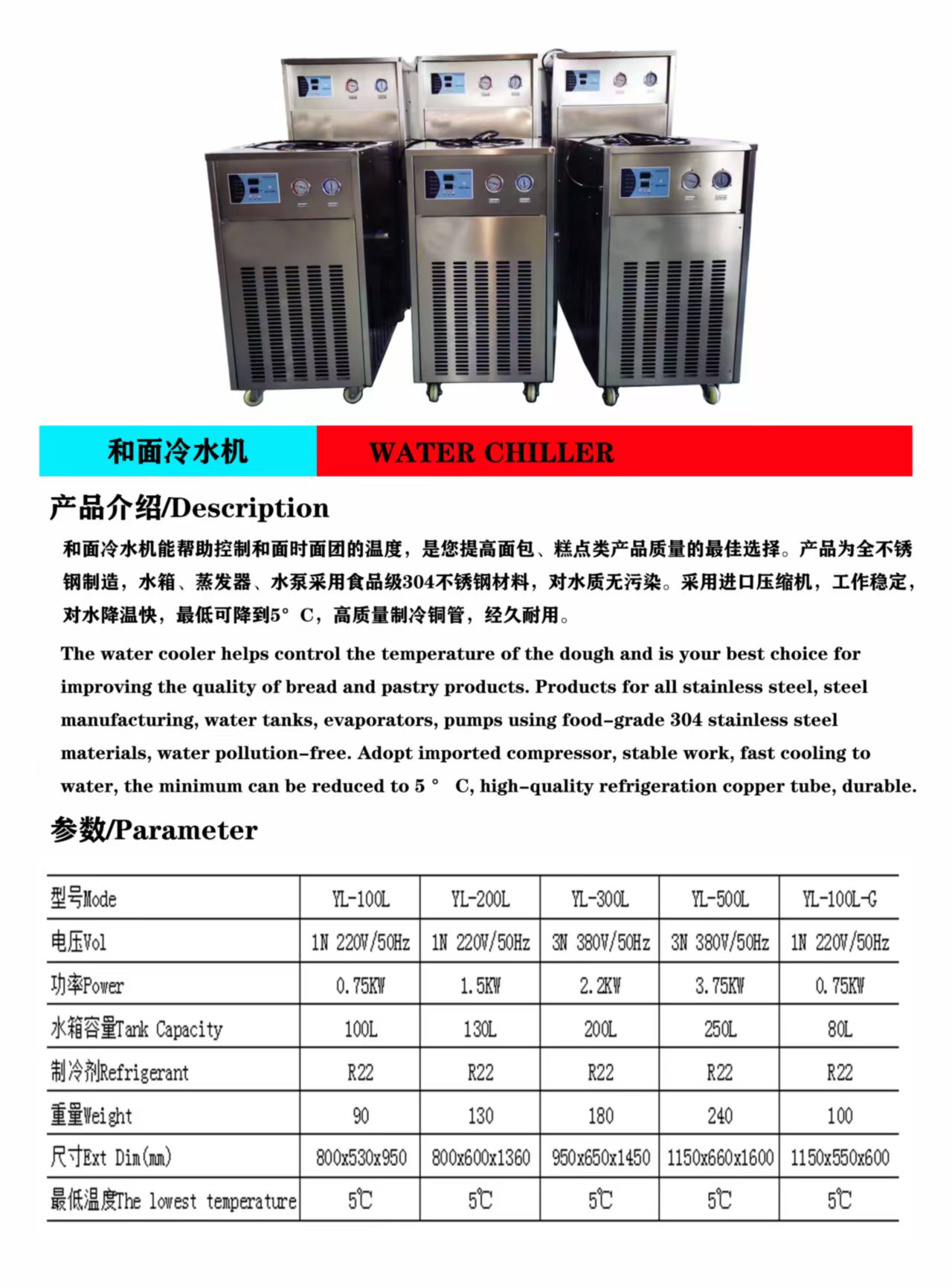
II. Working Principle of Industrial Chillers
Industrial chillers are mainly composed of compressors, condensers, evaporators, water pumps, expansion valves, electrical control systems, and water tanks.
The working process is as follows:
1. After the refrigeration system is started, the compressor compresses the refrigerant, turning it into a high-temperature and high-pressure gas;
2. The refrigerant releases heat through the condenser and turns into a liquid;
3. The liquid refrigerant passes through the throttling device and is reduced in pressure before entering the evaporator;
4. The refrigerant absorbs the heat from the circulating water, lowering the water temperature;
5. The cooled water is transported by the water pump to the production equipment to achieve continuous cooling;
6. The cooled water returns to the chiller for further cooling.
Through continuous circulation, precise temperature control is achieved.
III. Main Features of Industrial Chillers
1. Precise temperature control, ensuring stable production
Industrial chillers use an intelligent temperature control system to precisely adjust the water temperature according to production needs, reducing temperature fluctuations and ensuring the long-term stable operation of equipment.
Advantages:
High temperature control accuracy
Strong temperature stability
Reduces product defect rate
Improves processing consistency
2. Efficient cooling, rapid heat dissipation
High-performance compressors and optimized heat exchange systems are used to improve the cooling efficiency, enabling the equipment to quickly remove the heat generated during production.
Applicable to:
Equipment with long-term continuous operation
High-load production environments
High-precision processing equipment
3. Energy-saving and environmentally friendly, reducing operating costs
Modern industrial chillers optimize the refrigeration system design to improve energy utilization efficiency.
Main manifestations:
Efficient compressors reduce energy consumption
Intelligent control reduces ineffective operation
Precise matching of load requirements
Reduces enterprise comprehensive production costs
4. Intelligent control, convenient operation
Equipped with an intelligent control system, it can monitor:
Outlet water temperature
Return water temperature
Compressor operating status
Water flow pressure
Fault information
Realize automatic operation, abnormal alarm, and protection, improving equipment management efficiency.
5. Safe and reliable, long service life
Industrial chillers have multiple protection functions:
High and low pressure protection
Anti-freezing protection
Overload protection
Water flow protection
Temperature abnormal alarm
Effectively reduces equipment failure rate and improves long-term operational reliability.
IV. Application Areas of Industrial Chillers
New energy industry
Used for temperature control in battery production equipment, battery testing equipment, laser welding equipment, etc., to ensure the stability of the production process.
Mechanical processing industry
Provide cooling for CNC machines, grinding machines, cutting equipment, etc., improving processing accuracy.
Laser industry
Provide stable cooling for laser cutting machines, laser welding machines, laser marking equipment, protecting core components.
Plastic industry
Cooling injection molding machines, extrusion machines, etc., improving product molding quality.
Hydraulic equipment industry
Cool hydraulic machines, oil pressure systems, controlling the temperature of hydraulic oil, improving equipment working stability. V. Summary of Advantages of Industrial Chiller
1. Stable and Reliable
Utilizing mature refrigeration technology, it ensures the long-term continuous operation of the equipment and meets the demands of industrial production.
2. Efficient and Energy-saving
Optimizing the system design to enhance the refrigeration efficiency and reduce the energy consumption of the enterprise.
3. Precise Temperature Control
Meeting the strict temperature control requirements of different industrial equipment, improving product quality.
4. Intelligent Management
The automated control system makes the equipment operation simpler and enhances the production management efficiency.
5. Flexible Customization
It can be personalized designed according to the actual needs of customers in terms of cooling capacity, water temperature range, pump flow rate, control method, etc.
6. Easy Maintenance
The reasonable structure design and reliable key components make it convenient for daily maintenance and upkeep.
VI. Industrial Chiller Facilitates the Upgrade of Intelligent Manufacturing
With the continuous development of industrial automation and precision manufacturing, the stability of equipment operation and the control of production environment have become increasingly important. As an important component of the industrial temperature control system, industrial chillers not only improve the operational efficiency of equipment but also help enterprises reduce production costs and enhance product competitiveness. High-performance industrial chillers, with their advantages of precise temperature control, efficient energy saving, and safety and stability, have become indispensable auxiliary equipment in modern industrial production, providing reliable guarantees for intelligent manufacturing and high-quality production.
二维码